From 19 to 25 March 2025, at the invitation of Professor Johannes Westberg, Head of the Department of Pedagogy at the University of Groningen, Assistant Professor Zhou Ying from our Institute visited the University of Groningen and engaged in academic exchanges with the department.
During the visit, Dr. Zhou reviewed the research proposal of the department’s doctoral student, Yingyan Li, titled “Transnational Universities in China and Europe: Between Geopolitical Objects and Sites for Learning”. She discussed the feasibility and challenges of the research with Li’s supervisors, Professor Johannes Westberg and Dr. Lourens van Haaften. Dr. Zhou noted that the study’s use of the concept of “social imaginaries” to explore transnational universities in two different contexts is highly valuable. She emphasized, however, that such imaginaries are dynamic processes, and that the conceptual origins and contextual applicability of “social imaginaries” should be carefully considered. She also pointed out that when describing transnational universities established by China and the United Kingdom, it is important not to overstate the contrast between the two countries’ modern higher education systems, as the origins of China’s modern universities can be traced back to the late Qing period and the early introduction of Western learning – a point that is also crucial when employing the theoretical framework of “social imaginaries.”
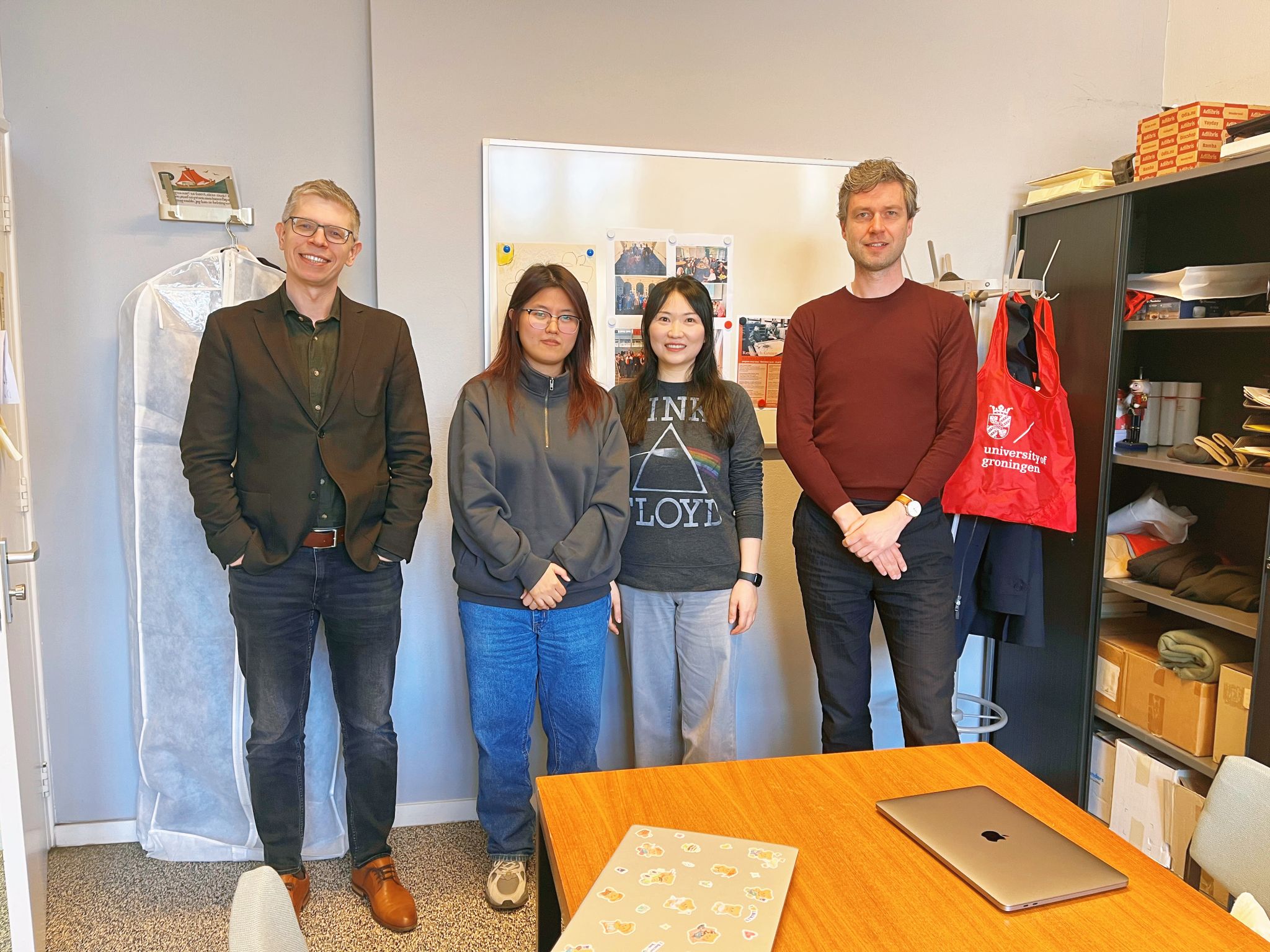
Dr. Zhou later attended the departmental research meeting and held further discussions with Professor Westberg on topics related to global higher education and the transnational history of education.
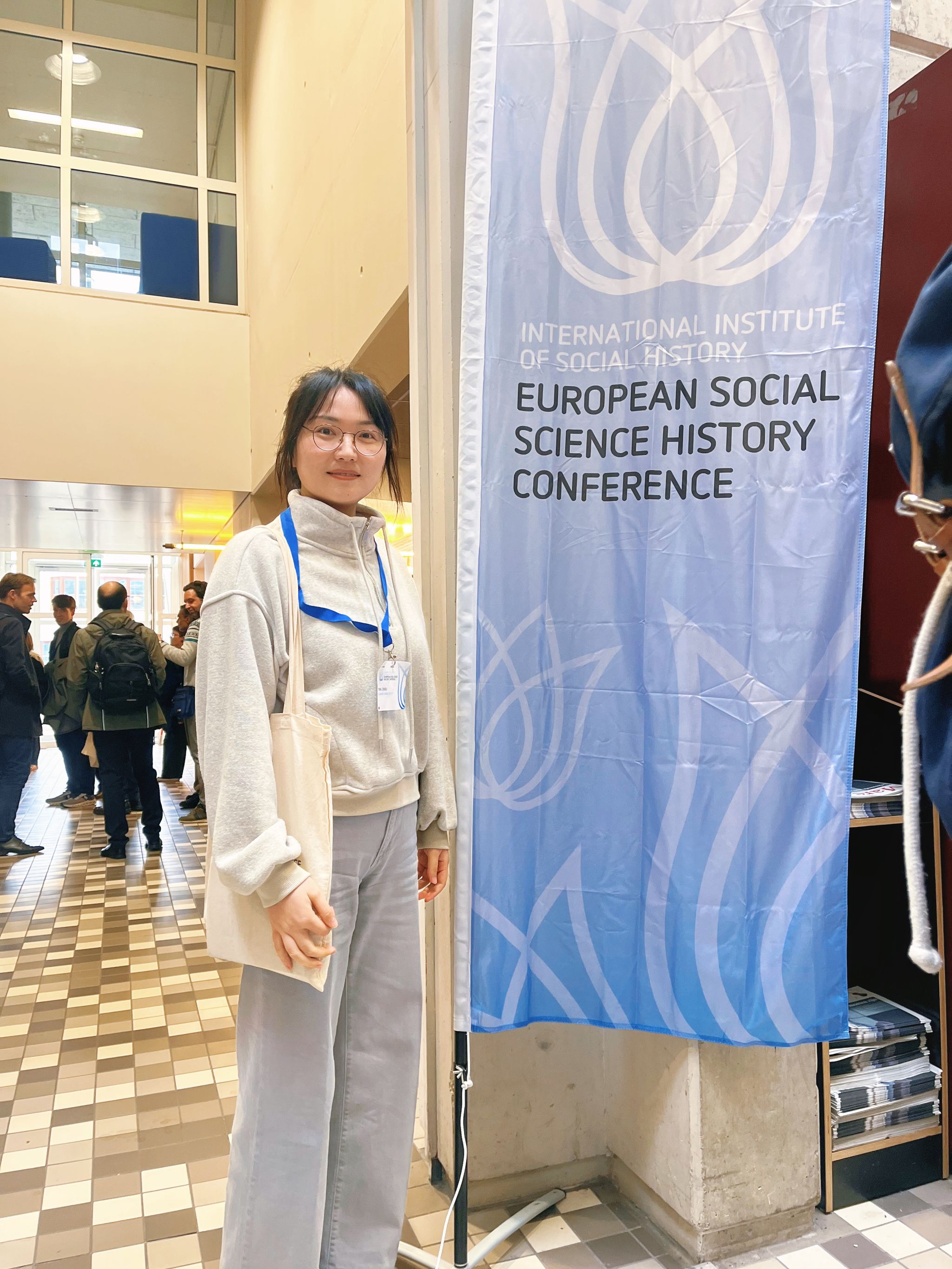
From 26 to 29 March, Dr. Zhou travelled to Leiden to participate in the 15th European Social Science History Conference (ESSHC 2025), hosted by the International Institute of Social History (IISH) and organized by Leiden University. Held biennially, the ESSHC is a major international academic event at the intersection of history and the social sciences. It aims to bring an interdisciplinary perspective to historical research and to strengthen dialogue across disciplines, regions, and historical periods. This year’s conference brought together more than one thousand scholars from Europe, Asia, the Americas, and beyond, covering historical topics from antiquity to the present. Twenty-seven thematic networks were established, spanning fields such as economic history, cultural history, educational history, gender studies, political movements, and global history. The conference mainly featured small-group thematic sessions, encouraging in-depth exchange and critical dialogue among scholars rather than the traditional plenary format. This distinctive scholarly environment fostered intellectual engagement and offered new insights into the integration of methodologies in history and social sciences.
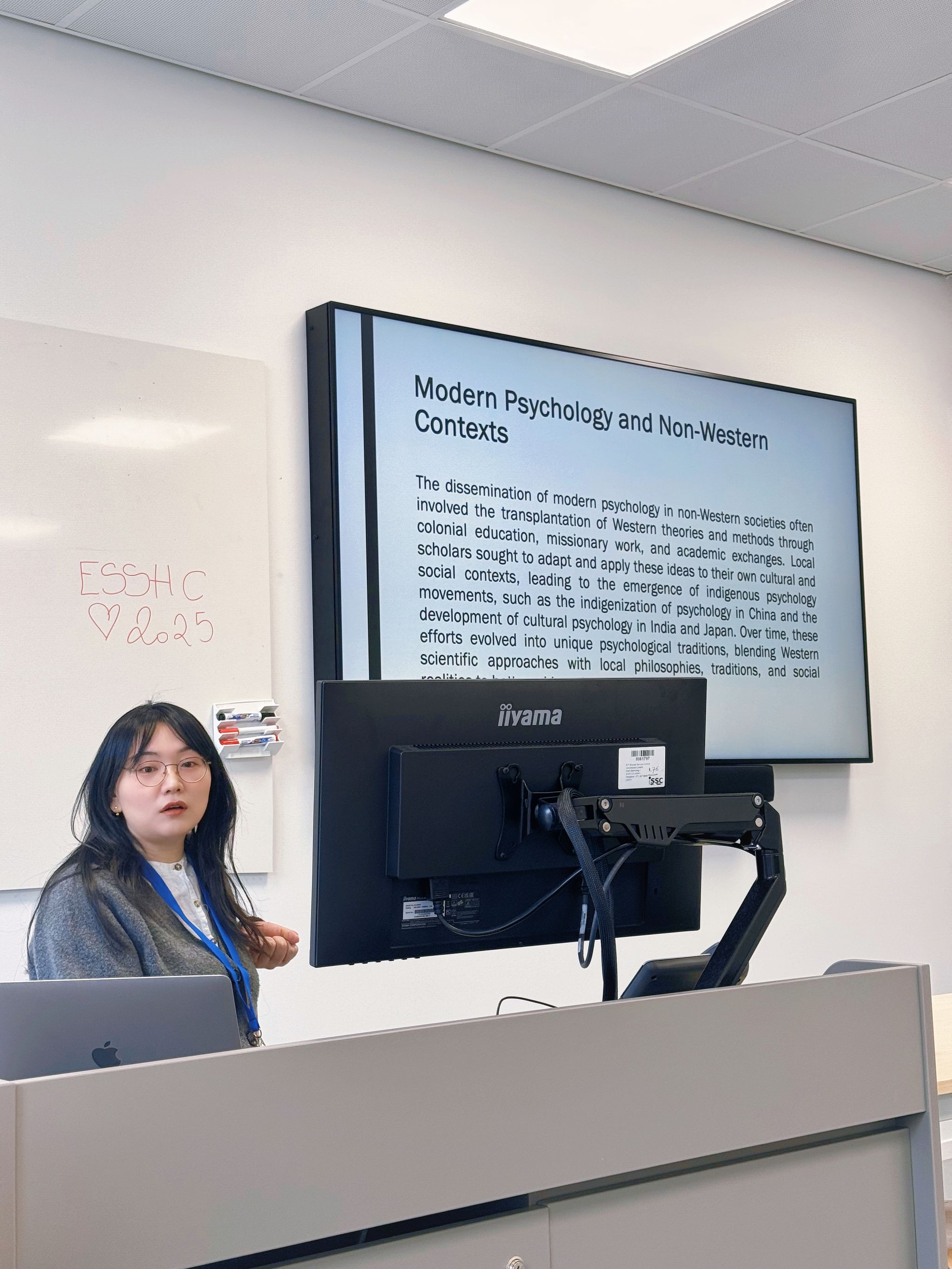
Dr. Zhou delivered a presentation in the Asia network titled “Origins and Developments of the ‘Indigenization’ of Psychology in China”. Taking the case of the modern psychologist Zhang Yaoxiang as a starting point, she examined his pioneering role in advocating the “Sinicization” of psychology, his changing positions and practical explorations across different periods, and the influence of Zhang and other early psychologists on subsequent discussions and efforts toward the “Sinicization” or “indigenization” of psychology in various regions and contexts in recent decades. She concluded by highlighting the complexity of psychological indigenization under different theoretical paradigms. Following the presentation, scholars from China, the United Kingdom, Switzerland, India and other countries engaged in lively discussions on the localization of psychology in transnational contexts.
This academic visit fruitfully fostered cross-cultural dialogue, inspired new research ideas, and further broadened academic horizons. With solid scholarship, an open academic attitude, and rigorous research ethos, faculty members of our Institute continue to engage actively in international academic exchange, demonstrating academic excellence and contributing insight and strength to the advancement of research in related fields.