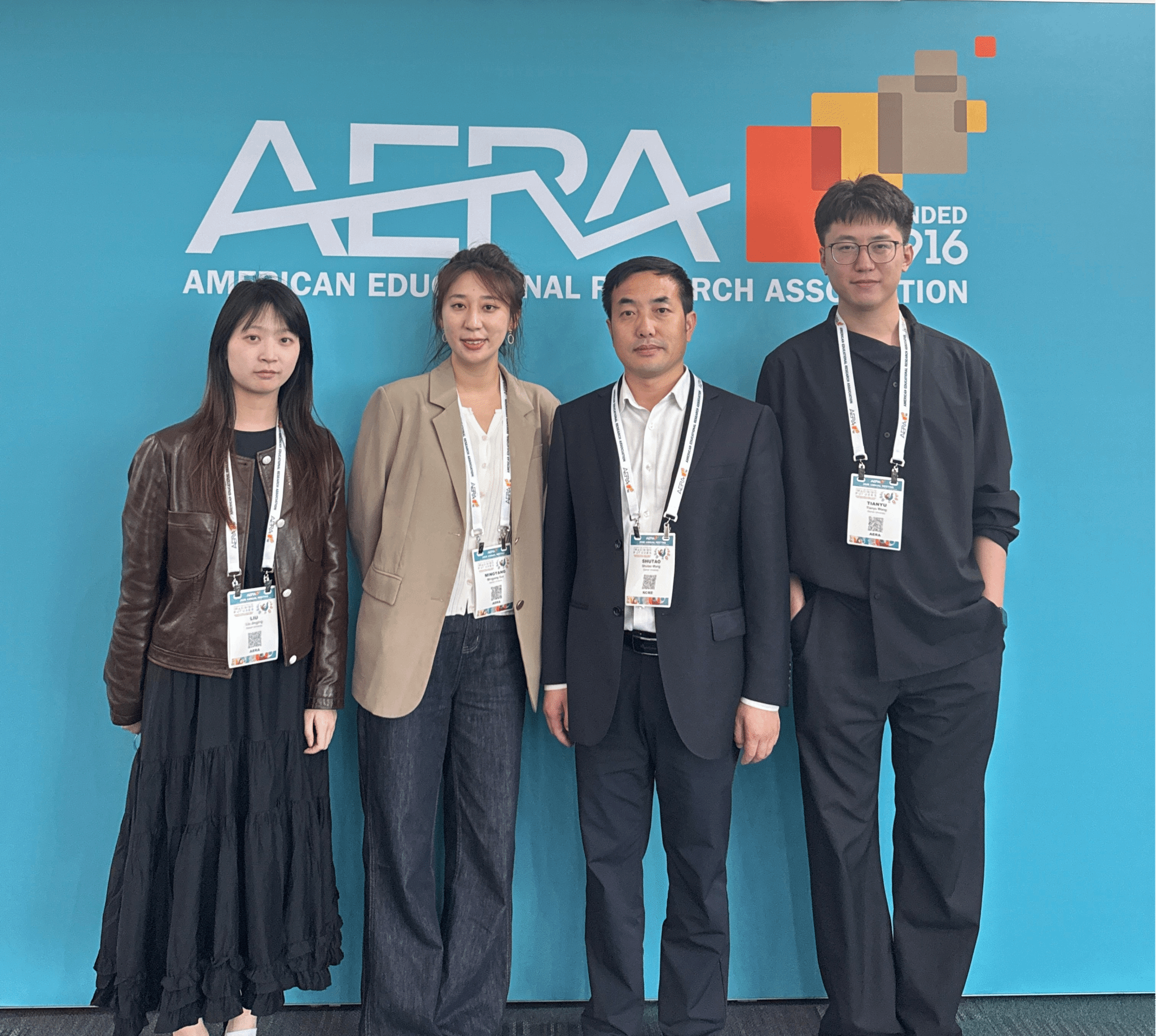
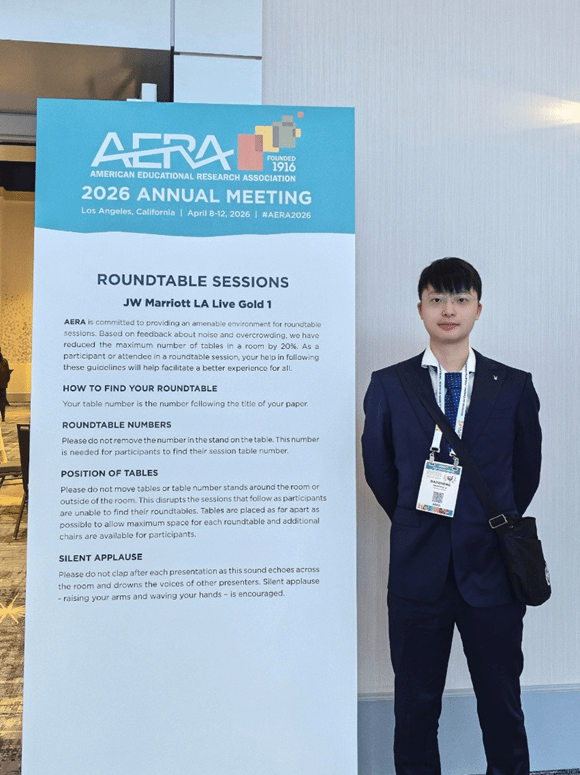
From 8 to 12 April 2026, the 2026 Annual Meeting of the American Educational Research Association (AERA) was successfully held at the Los Angeles Convention Centre in the United States. The theme of this year’s conference was ‘Unforgetting Histories and Imagining Futures: Constructing a New Vision for Education Research’. The conference featured a variety of formats, including keynote lectures, roundtable discussions and poster presentations, with over 2,500 academic sessions in total. Professor Wang Shutao and Assistant Professor Xiao Tong from our institute, along with four postgraduate students—Wang Tianyu, Li Daozheng, Guo Mingyang and Liu Jingjing—attended the conference and delivered academic presentations.
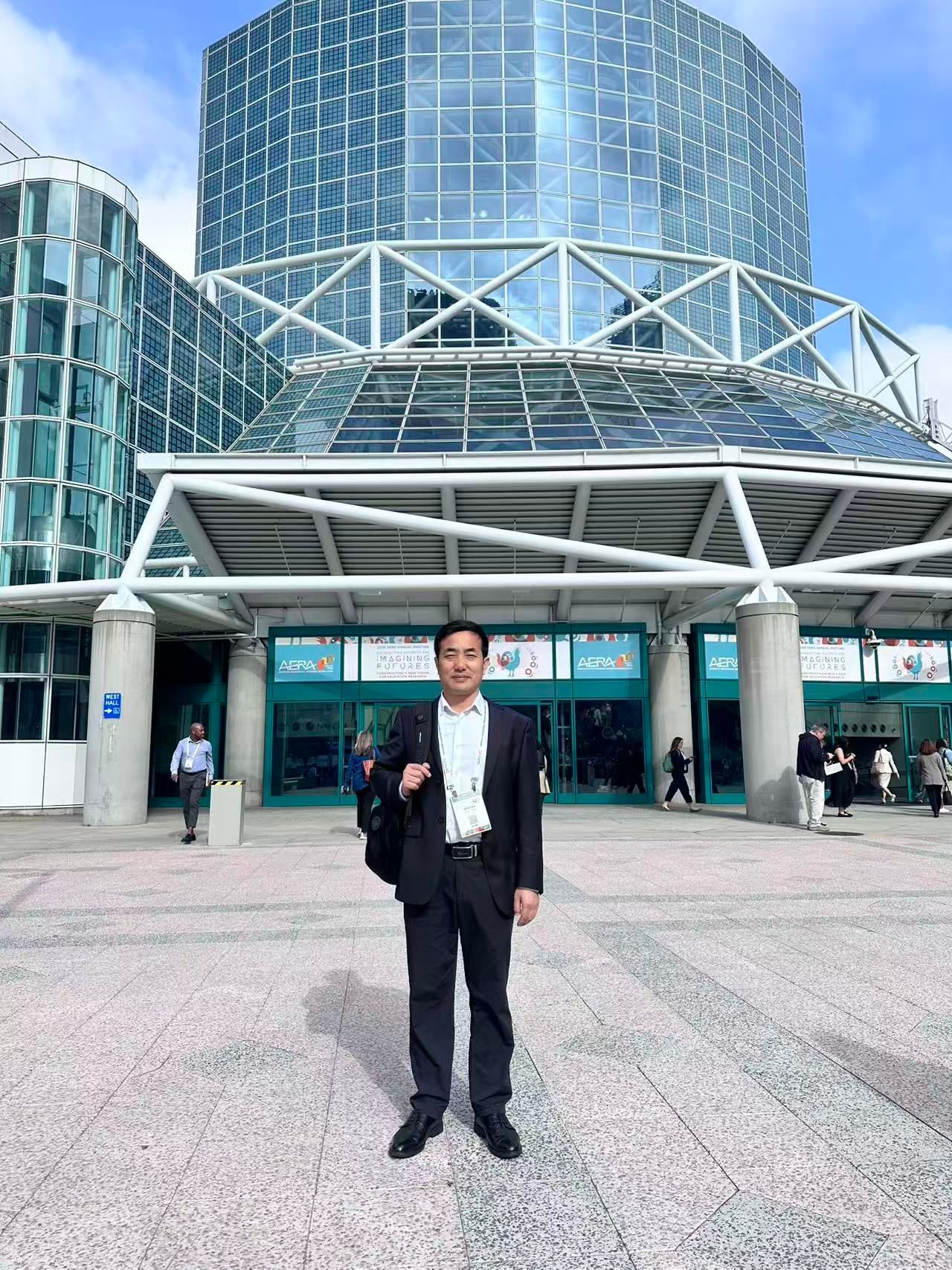
Under the theme ‘Student Learning and Development in College and Beyond’, Professor Wang Shutao presented a paper entitled ‘How Does Online Learning Affect College Students’ Deep Learning: A Study Using Data from China’. Drawing on large-scale survey data from Chinese universities, the presentation systematically examined the mechanisms through which online learning influences university students’ deep learning capabilities. The study concluded that online learning has a dual effect on deep learning: on the one hand, flexible access to resources and asynchronous communication help enhance students’ ability to integrate information and engage in independent inquiry; on the other hand, the lack of immediate interaction and contextualized experiences may weaken core dimensions of deep learning, such as critical thinking and knowledge transfer. Consequently, it is not sufficient to simply ‘transfer’ face-to-face courses online; rather, instructional design must be reconfigured to foster deep cognitive engagement. This research provides empirical evidence and practical pathways for the digital transformation of education within the Chinese context.
Under the theme of ‘Fairness, Justice, and Solidarity in Higher Education’, Assistant Professor Xiao Tong delivered a presentation titled ‘Beyond Fairness to Whom: A Macro Distributive Justice Framework for University Scholarship Models’. The presentation constructed an analytical framework for university scholarship models from the perspective of macro-distributive justice, pointing out that scholarship systems are not merely incentive tools or funding arrangements, but rather key mechanisms embedded within the value hierarchy, resource allocation logic, and institutional orientation of higher education. The core issue lies not only in “whether it is fair”, but also in “fairness to whom” and “which form of fairness is prioritized”. The research also revealed multiple tensions that may exist within university scholarship models, such as the tension between efficiency-oriented and compensation-oriented approaches, the tension between incentives for excellence and universal support, and the tension between the logic of individual competition and the logic of solidarity within the educational community.
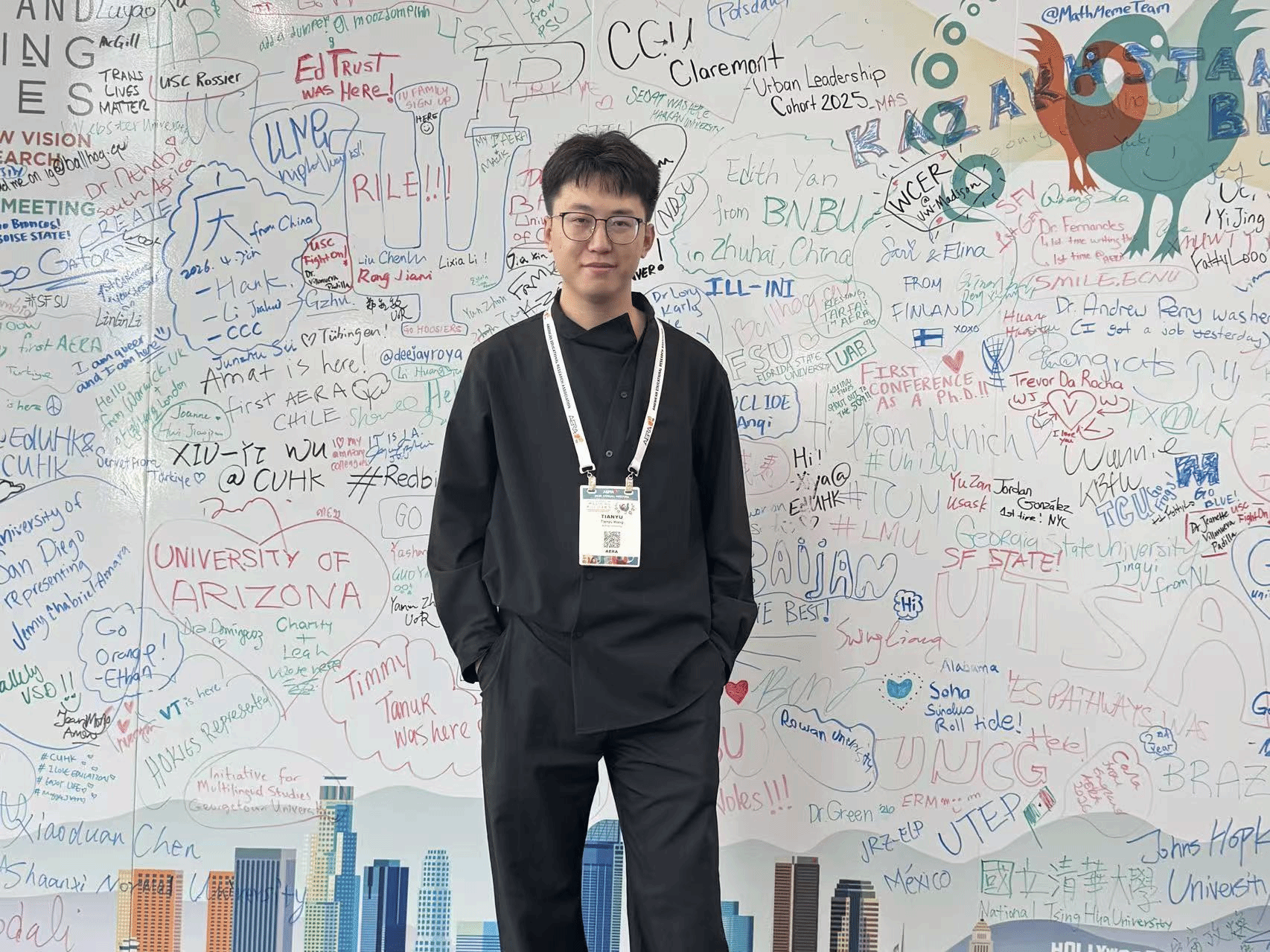
At the roundtable forum “Developing Faculty as Scholars” organised by SIG-Faculty Teaching, Evaluation, and Development, Wang Tianyu, a PhD student from the 2024 cohort, delivered a presentation titled “Beyond Retirement: Institutional Logics and Governance of Faculty Rehiring in China’s Double First-class Universities”. The presentation analysed policy documents on faculty rehiring at China’s “Double First-Class” universities, exploring how institutions support retired academics in continuing their academic work through institutional design. The research suggests that current rehiring policies primarily reflect multiple institutional logics, including academic output, organisational stability and knowledge transmission, cost efficiency, and regulatory compliance. Faculty rehiring is no longer merely a transitional arrangement following retirement, but is gradually becoming a key mechanism for universities to coordinate academic development and organisational governance.
Under the theme ‘Assessing College Student Success and Impact’, Li Daozheng, a PhD student from the Class of 2024, delivered a presentation entitled ‘Ascenders, circulators, and stabilisers: stratified returns to faculty mobility in China’s performance-driven academic system’. Drawing on longitudinal data covering over 70,000 faculty members, 355 institutions and 3,554 mobility events nationwide, the presentation revealed the stratified return structure of academic mobility within China’s performance-driven higher education system. The research transcended the binary framework of ‘human capital appreciation’ and ‘transition costs’, emphasizing the pivotal role of institutional environments and resource allocation in shaping scholars’ career trajectories, thereby providing empirical insights from China for global talent mobility policies and reforms to evaluation systems. The presentation sparked lively discussion, with participating scholars engaging in in-depth exchanges on the relevant topics.
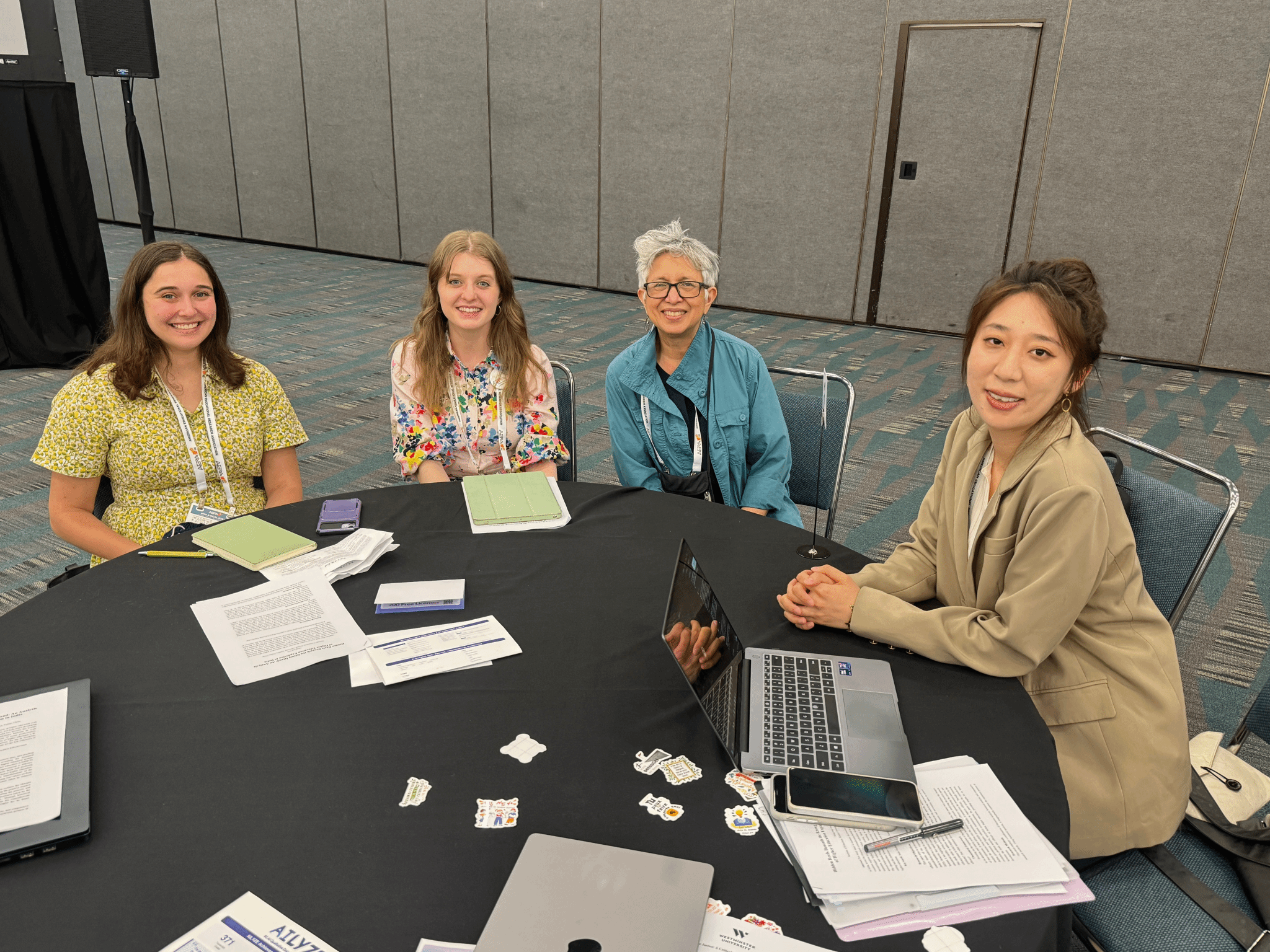
At the roundtable forum “Critical Education in an International Context” organised by Division F: Historical Inquiry in Education, Guo Mingyang, a PhD student in the 2024 cohort, delivered a presentation titled “Hidden Reefs Beneath the Rising Island: An Analysis of Higher Education Expansion in India”. The presentation systematically examined the historical trajectory, current state and associated efficiency issues of India’s higher education expansion, revealing the structural contradictions underlying its rapid growth and summarising the measures taken by the Indian government and higher education institutions to improve efficiency. The rapid expansion of higher education in India has not led to a corresponding improvement in efficiency; rather, it has highlighted ‘losses’ such as the ‘brain drain’ and severe unemployment among highly skilled professionals.
Under the theme of Adolescence and Youth Development, Liu Jingjing, a 2023 Master’s student, presented a report titled “The Impact of Group Discrimination on Smartphone Addiction: A Research Using Data from China”. Based on a large-scale sample of Chinese adolescents, this study revealed for the first time the underlying psychological mechanism whereby group discrimination indirectly exacerbates smartphone addiction by undermining individuals’ sense of security. By linking socio-psychological factors with behavioural addiction, the study provides a new framework for understanding adolescent vulnerability in the digital age. It emphasises the crucial role of a sense of social equity and psychological security in digital health interventions for adolescents, thereby offering ‘Chinese experience’ for the global governance of adolescent mental health.
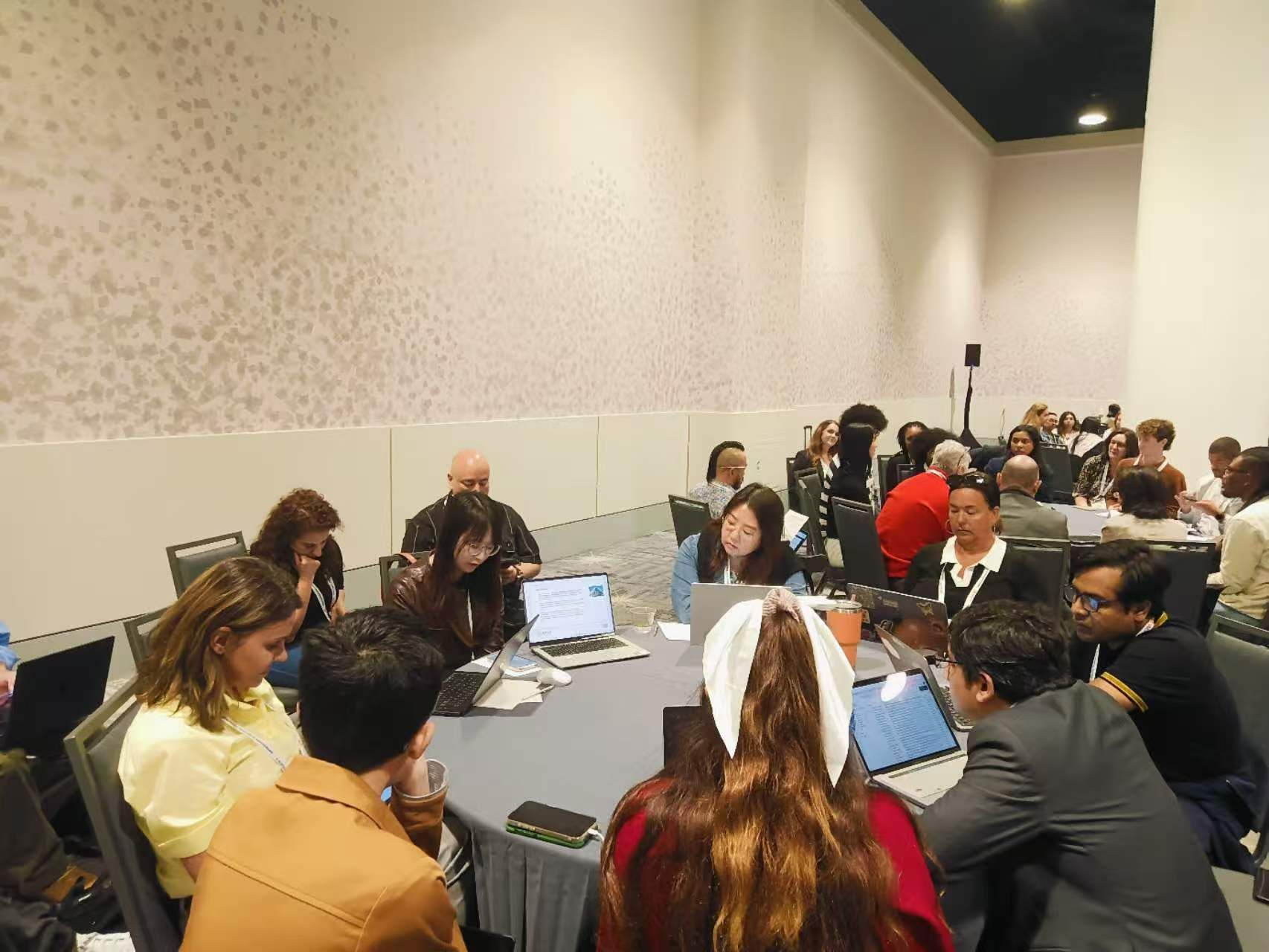
During the conference, lively discussions took place on the relevant topics. Participating scholars raised numerous constructive questions regarding the content of the presentations and engaged in further exchanges both within and outside the conference venue.