From July 16 to 18, 2024, the "Academic Seminar on Discipline Construction and the Development of Local Universities & the 6th Plateau Education Sustainable Development Forum" was held at Qinghai Normal University. This conference was sponsored by Qinghai Normal University, Center for Higher Education Development of Xiamen University, and the Qinghai Provincial People’s Government-Beijing Normal University Plateau Science and Sustainable Development Research Institute. It was co-hosted by the School of Education of Qinghai Normal University, the Institute of Education of Xiamen University, the Qinghai Branch of the Higher Education Development Research Center of Xiamen University, and the research team in the field of plateau education. Professor Liu Zhentian, Secretary of the Party of our institute and Dean Professor Bie Dunrong of our institute led a delegation of more than 20 teachers and student representatives to attend the conference.

In his speech at the opening ceremony, Liu Zhentian stated that Xiamen University and Qinghai Normal University, joining hands across mountains and seas, have achieved another fruitful result. In 2023, the two universities jointly established the Qinghai Branch of the Higher Education Development Research Center of Xiamen University, and this conference is an important embodiment of their in-depth cooperation. As a national first-class discipline, the education discipline of Xiamen University will spare no effort to cooperate with Qinghai Normal University to strengthen the construction of the education discipline.
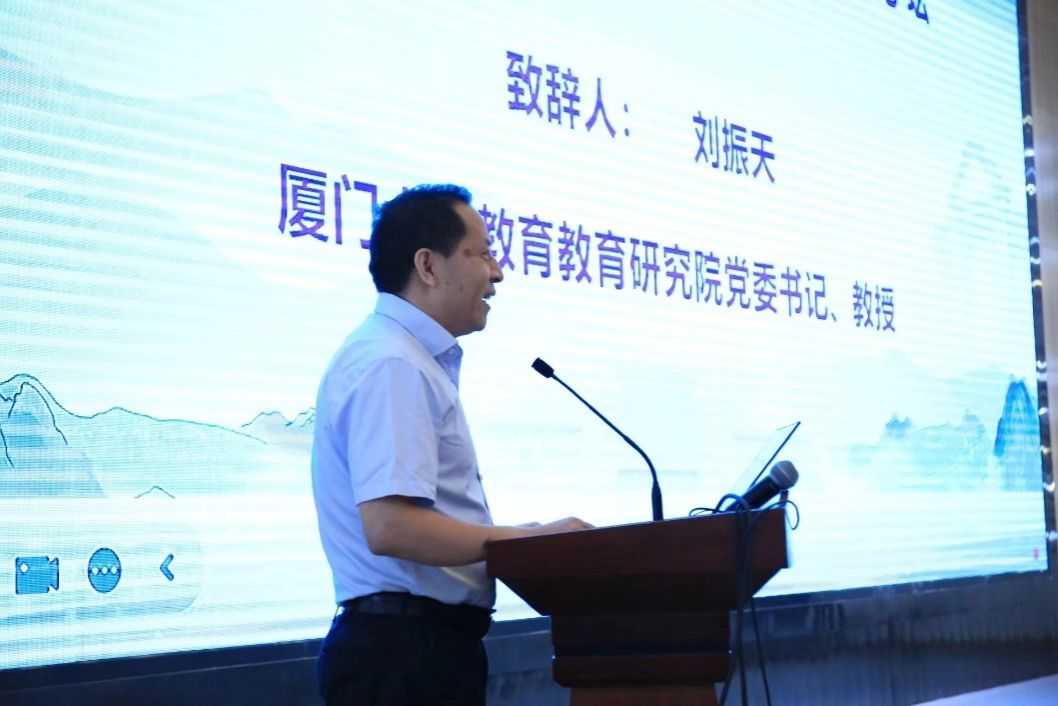
Liu Zhentian, Bie Dunrong, Zhao Tingting, Qin Hongxia, Wang Shutao and others delivered plenary reports at the forum. With the title Dual Structure and Identity Markers: Difficulties and Solutions in the University Classification System, Liu Zhentian discussed that universities face an obvious dual pattern and interference from identity markers in aspects such as social prestige, infrastructure, school-running conditions, and public evaluation. He suggested that in the layout and development of higher education, we should shift from prioritizing efficiency to taking equity as the foundation, establish funding and allocation systems based on different tracks, build a classified evaluation and management system, improve classified examination and enrollment policies, and resolve the dual structure and identity markers.
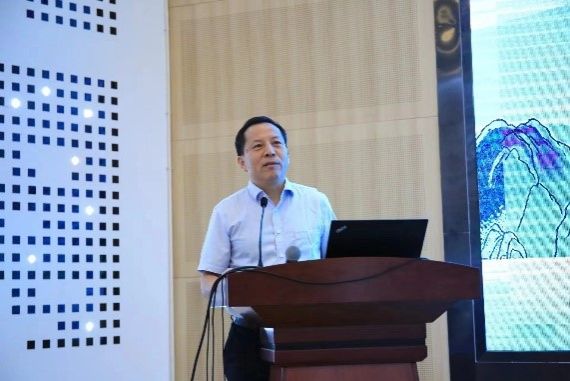
With the title The Chinese Model of Higher Education Universalization and the Development Strategy for Higher Education Universalization in Western China, Bie Dunrong expounded on the main issues that need to be addressed for the development of China’s higher education universalization towards the medium-to-high stage. He suggested that the system for the central and local governments at two levels to run higher education in western China should be improved, the rational and balanced layout of higher education in western China should be optimized, the advantages of the nationwide system should be leveraged to strengthen policy regulation and inter-regional university cooperation between eastern and western China, and the capacity for high-quality development of universities in western China should be comprehensively enhanced.
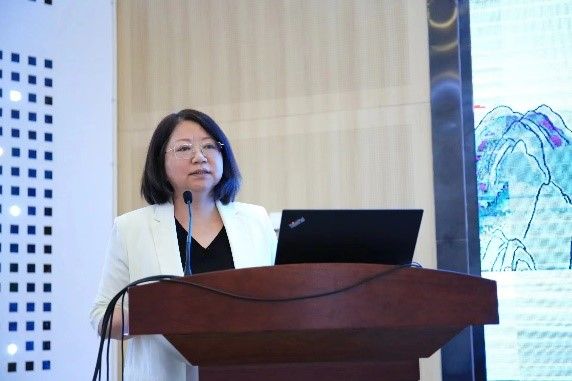
With the title New Engineering Construction in Application-Oriented Universities for the New Industrial Revolution, Zhao Tingting discussed that the industrial revolution driven by the new technological revolution exhibits characteristics such as covering multiple technical fields and having strong permeability. She suggested that local application-oriented universities should, based on local development and their own actual conditions, establish a professional training model oriented towards vocational needs, focusing on practical ability cultivation, and taking industry-university integration as the approach, while continuously optimizing and designing talent training programs for application-oriented undergraduate institutions.
With the title Equity, Quality, and Service: How Universities and Secondary Schools Evaluate the College Entrance Examination Selection Mechanism, Qin Hongxia’s research found that among the mediating variables influencing satisfaction with the new college entrance examination reform, "development expectations" have the greatest impact, while "talent selection expectations" have the smallest. This differs from the traditional perception that people used to focus more on the selection function of the college entrance examination. For the future reform of the new college entrance examination, on the one hand, it is necessary to promote educational reform and continuously improve the quality of education; on the other hand, it is necessary to gradually reduce the emphasis on exam-oriented preparation, endow the new college entrance examination with a greater guiding role in promoting students’all-round development, and return to the essential educational purpose of nurturing people.

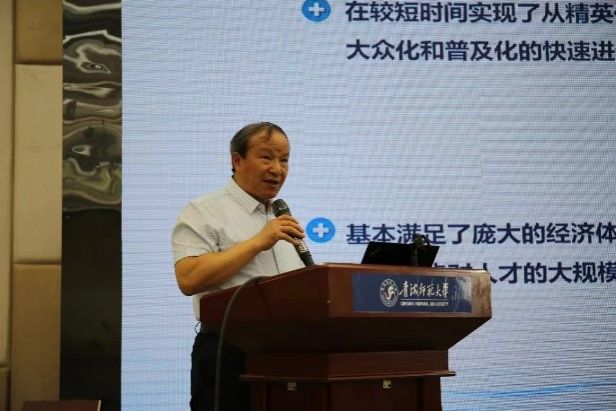
With the title Four Paradigms of How Social Capital Influences Educational Attainment, Wang Shutao conducted discussions from the perspectives of "network resource theory and educational attainment", "social closure theory and educational attainment", "group resource theory and educational attainment", and "macro-social capital theory and educational attainment". He proposed to systematically explore the paradigms of social capital’s influence on educational attainment, use the human development ecosystem theory to integrate relevant research, focus on the subjectivity and constructiveness of students’ educational attainment, and further explore educational attainment.

In the sub-forum for master’s and doctoral students, Hu Yanting, Li Jingyun, Wang Chen, Cui Shijie, and Miao Yuwei of our institute participated in the roundtable discussion. Focusing on problem-solving, the five graduate students centered their discussions on national strategies and local education development needs. They shared their research topics in special-themed exchanges, demonstrating the spirit and demeanor of graduate students from the Institute of Education at Xiamen University.
At the closing ceremony, Bie Dunrong summarized the characteristics of this conference with three Chinese characters: "高 (high)", "深 (in-depth)", and "新 (novel)". He argued that the conference stood out not only for the high altitude of its venue but also for the high caliber of its content; the expert reports were in-depth, and the exchange of ideas among participants was equally profound. The conference explicitly proposed the new concept of establishing the "Plateau Education Studies" discipline, explored the research fields of this discipline, and thus holds important enlightenment significance for the development of China’s education disciplines.

Rooted in the major strategic needs of the country, this conference centered on the theme of "Discipline Construction and the Development of Local Universities". It focused on core topics including discipline construction and independent knowledge systems, degree program layout and resource allocation, discipline construction and policy supply, digital empowerment for discipline construction in local universities, discipline construction and regional innovation development, discipline construction and cross-regional cooperation in local universities, and international comparison of discipline construction. Over three days, in-depth exchanges and discussions were conducted, yielding numerous constructive suggestions and ideas for the sustainable development of education in plateau areas and reaching broad consensus. This conference was not only a feast of ideas and an opportunity for cooperation and exchange, but also a crucial milestone in advancing the high-quality development of local universities and promoting the exchange and sustainable progress of higher education between eastern and western China.