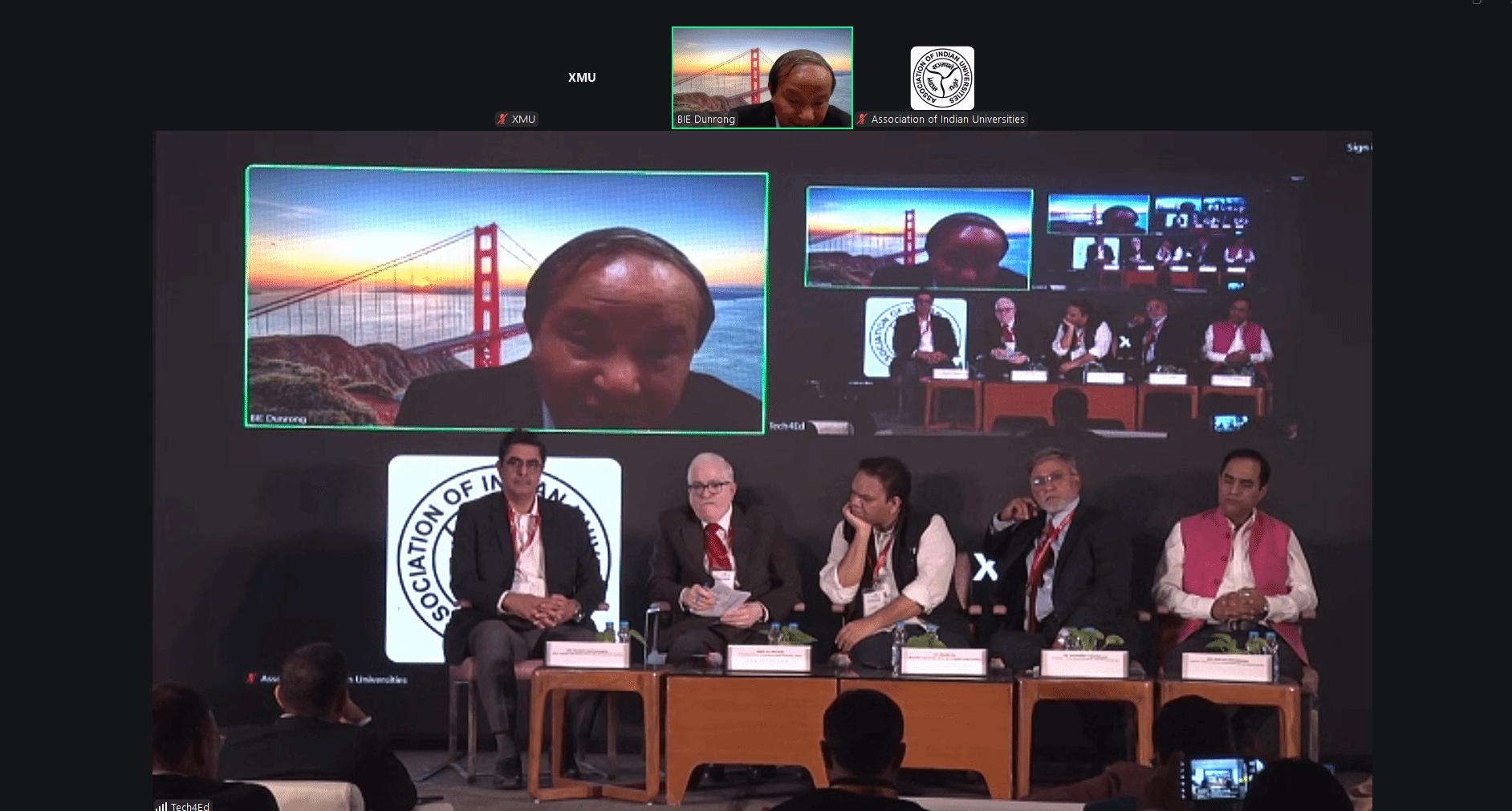
From 13 to 14 November 2025, the Global University Associations Forum (GUAF) 2025 and the Tech4Ed International Conference were held in New Delhi, India. Leaders and representatives from the China Association of Higher Education, the Association of African Universities, the European University Association, the American Council on Education, the ASEAN University Network, the Association of Arab Universities, and the Association of Indian Universities attended the event. The forum was hosted by the Association of Indian Universities.
This year’s forum focused on the theme “The Future of Higher Education in the Age of Artificial Intelligence”, aiming to promote the development of a more open, collaborative, and sustainable global higher education cooperation system. At the opening ceremony, Professor Vinay Pathak, Co-Chairman of the Association of Indian Universities, Dr. Pankaj Mittal, Secretary-General, and Dr. Kuldeep Dagar, Secretary, delivered speeches to welcome the leaders and representatives of university associations from various regions and countries, while outlining the recent developments of higher education in India and the preparations for the current forum.
Heads of university associations from Africa, the Arab region, the United States, ASEAN, China, Europe, and India presented updates on their respective associations’ work, focusing particularly on their roles in advancing higher education development in their regions and on the pathways for promoting the application of artificial intelligence in higher education.
The China Association of Higher Education participated online, with Vice President and Secretary-General Li Nan, Deputy Secretary-General Gao Xiaojie, and several experts attending the meeting. Professor BIE Dunrong, Dean of our Institute, attended the forum as a member of the Academic Development Advisory Committee of the China Association of Higher Education.
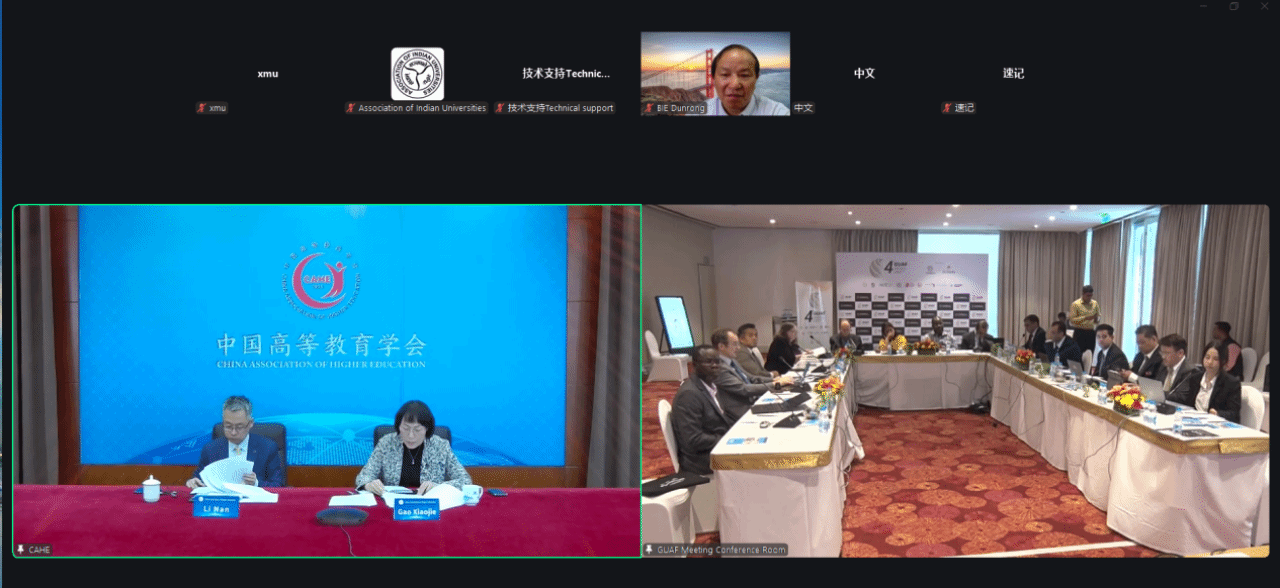
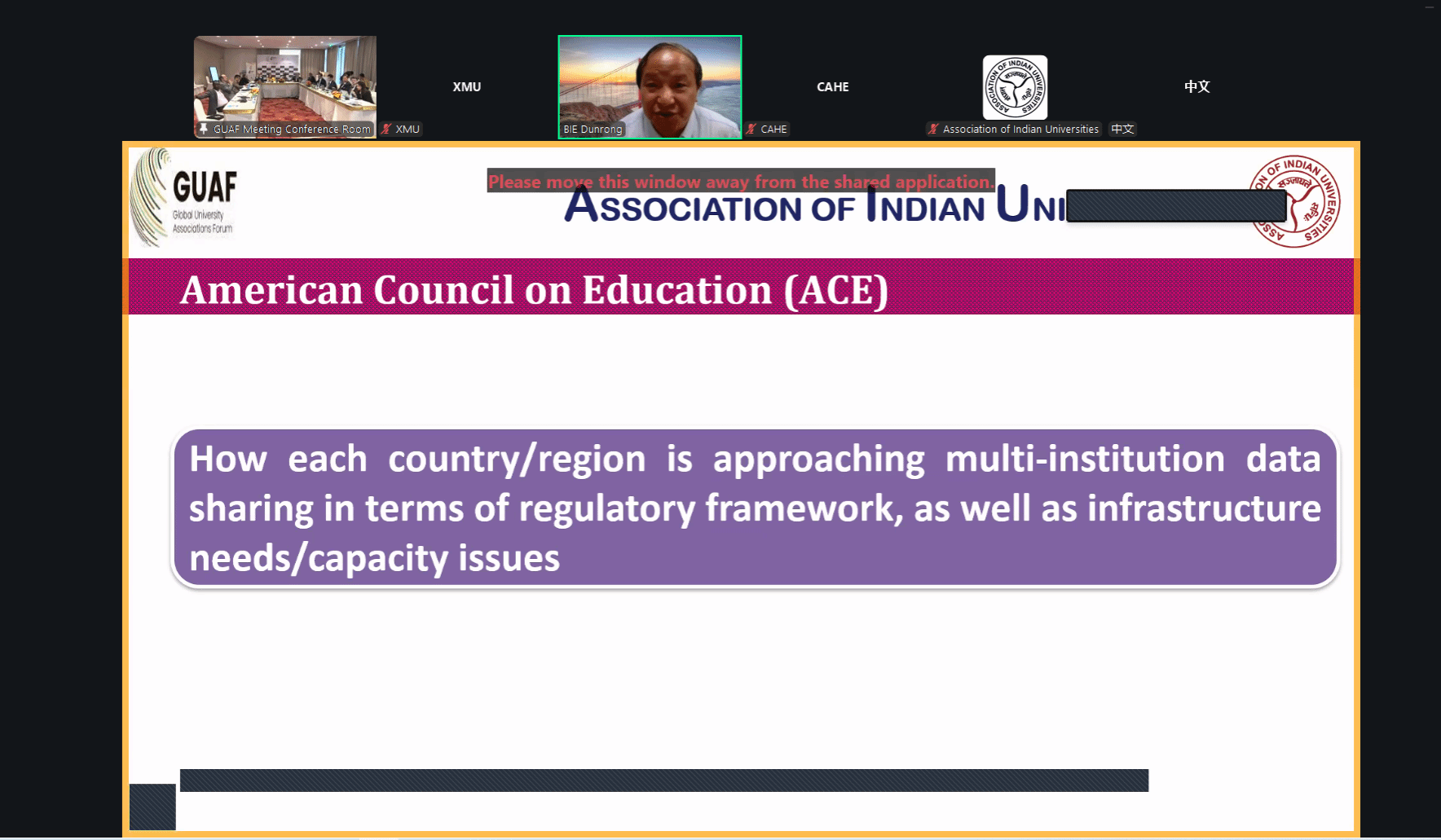
At the roundtable session on the afternoon of November 13, during the discussion of Topic 5, “The Impact of Artificial Intelligence (AI) on Higher Education,” Professor BIE Dunrong was invited to deliver a thematic presentation titled “The Main Impacts of AI on Higher Education.” He elaborated on the structural transformations brought about by the deep integration of artificial intelligence into higher education.
Professor Bie pointed out that generative AI and large-model technologies are driving a new wave of “intelligent disruption,” leading to extensive and profound restructuring—from curriculum systems to teaching methods, and from management mechanisms to quality assurance systems. At the same time, he highlighted several emerging challenges in the application of AI in higher education, including the potential widening of the digital and intelligent divide, students’ overreliance on large models, and risks related to data privacy and ethics. He called for the development of a more secure, controllable, and inclusive intelligent education ecosystem.
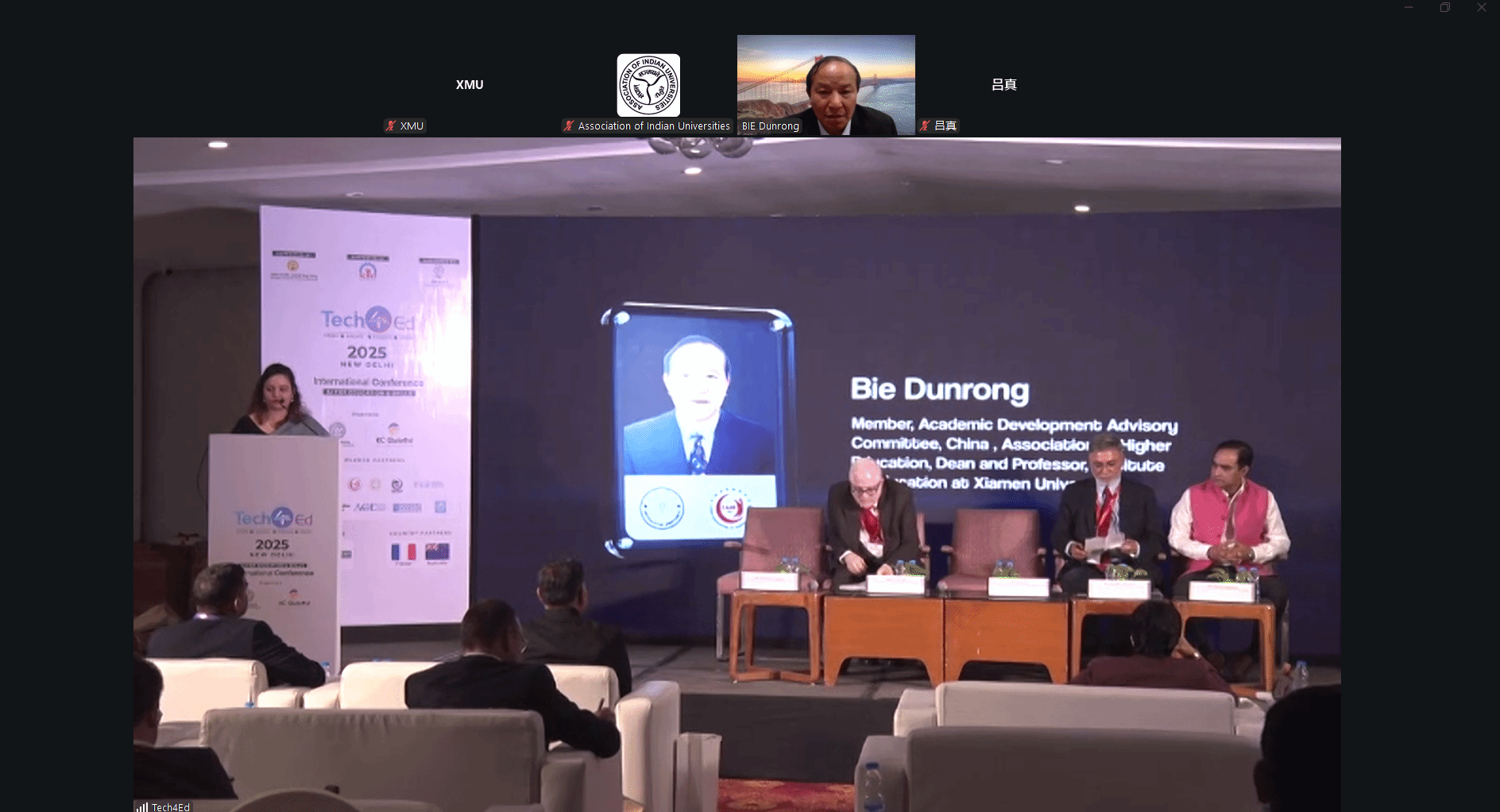
On November 14, the Tech4Ed International Conference continued under the theme “AI for Education and Skills.” University presidents, experts, and industry representatives from numerous countries engaged in in-depth discussions on topics including AI governance, future skills, educational assessment, and ethics. Several government officials and representatives of international organizations delivered remarks at the opening ceremony, highlighting the strong attention paid by India and the international community to AI-empowered education.
In the afternoon, during Panel Discussion 3: “AI-Enabled Assessment,” Professor BIE Dunrong was once again invited to give a thematic presentation, focusing on how universities can build more scientific and reliable assessment systems in the era of AI. He emphasized that the essence of intelligent assessment lies in using AI technologies to generate data-driven value judgments based on teaching processes and learning behaviors. While it does not change the core purpose of assessment, it is transforming the sources of evidence, the technological foundation, and the boundaries of evaluative capabilities.
Starting from different assessment targets—such as classroom teaching, student learning, and administrative effectiveness—he analyzed the crucial role of AI in real-time data collection, learning-process monitoring, behavioral analytics, and governance optimization. He particularly stressed that intelligent assessment can significantly enhance efficiency, objectivity, and the capacity for immediate feedback, ushering higher education quality assurance into a new stage characterized by visualization, process-orientation, and dynamic responsiveness.
Through these two important presentations and exchanges, the expert from our institute demonstrated at the forum China’s theoretical explorations and practical achievements in the fields of intelligent education and intelligent assessment. His contributions also offered the international community a new perspective for understanding China’s higher education reform experience in the era of artificial intelligence.