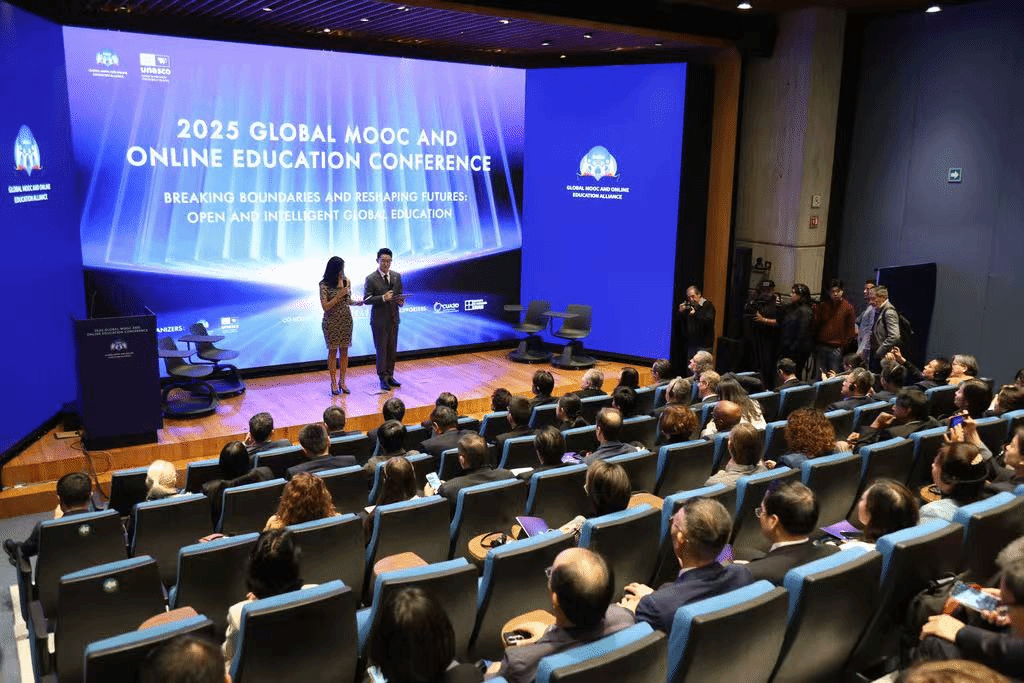
From December 2 to 4, 2025, the 2025 Global MOOC and Online Education Conference was held at the National Autonomous University of Mexico (UNAM). Professor BIE Dunrong, Dean of the Institute of Education at Xiamen University, Associate Professor GUO Yirong, and postgraduate student LYU Zhen were invited to attend the event. Jointly organized by the Global MOOC and Online Education Alliance (GMA) and UNESCO Institute for Information Technologies in Education (IITE), and co-hosted by Tsinghua University and UNAM, the conference brought together representatives from universities, online education platforms, international organizations, and education policy institutions across more than 20 countries to discuss the reshaping of global higher education in the age of artificial intelligence.
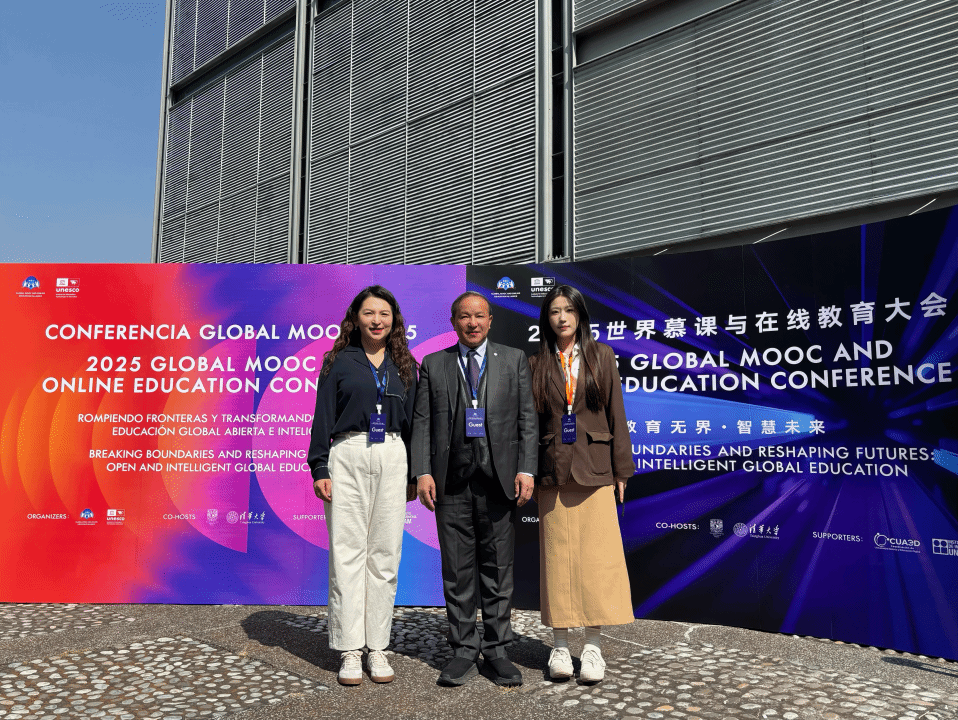
Centered on the theme “Breaking Boundaries, Reshaping Futures: Open and Intelligent Global Education,” the conference focused on the comprehensive transformation of teaching paradigms, learning models, and education governance systems driven by rapid advances in artificial intelligence. Throughout the sessions, experts emphasized that global higher education is undergoing significant structural change amid emerging technological revolutions and accelerated industrial transformation. The deep integration of AI and large-scale models into education is creating unprecedented opportunities for cross-border collaboration, innovative talent development, and enhanced learning equity, while also raising new challenges related to ethical governance, resource accessibility, and institutional innovation. The conference called for more systematic exploration in openness and sharing, technological integration, intelligent governance, and global cooperation to jointly build a future-oriented educational ecosystem.
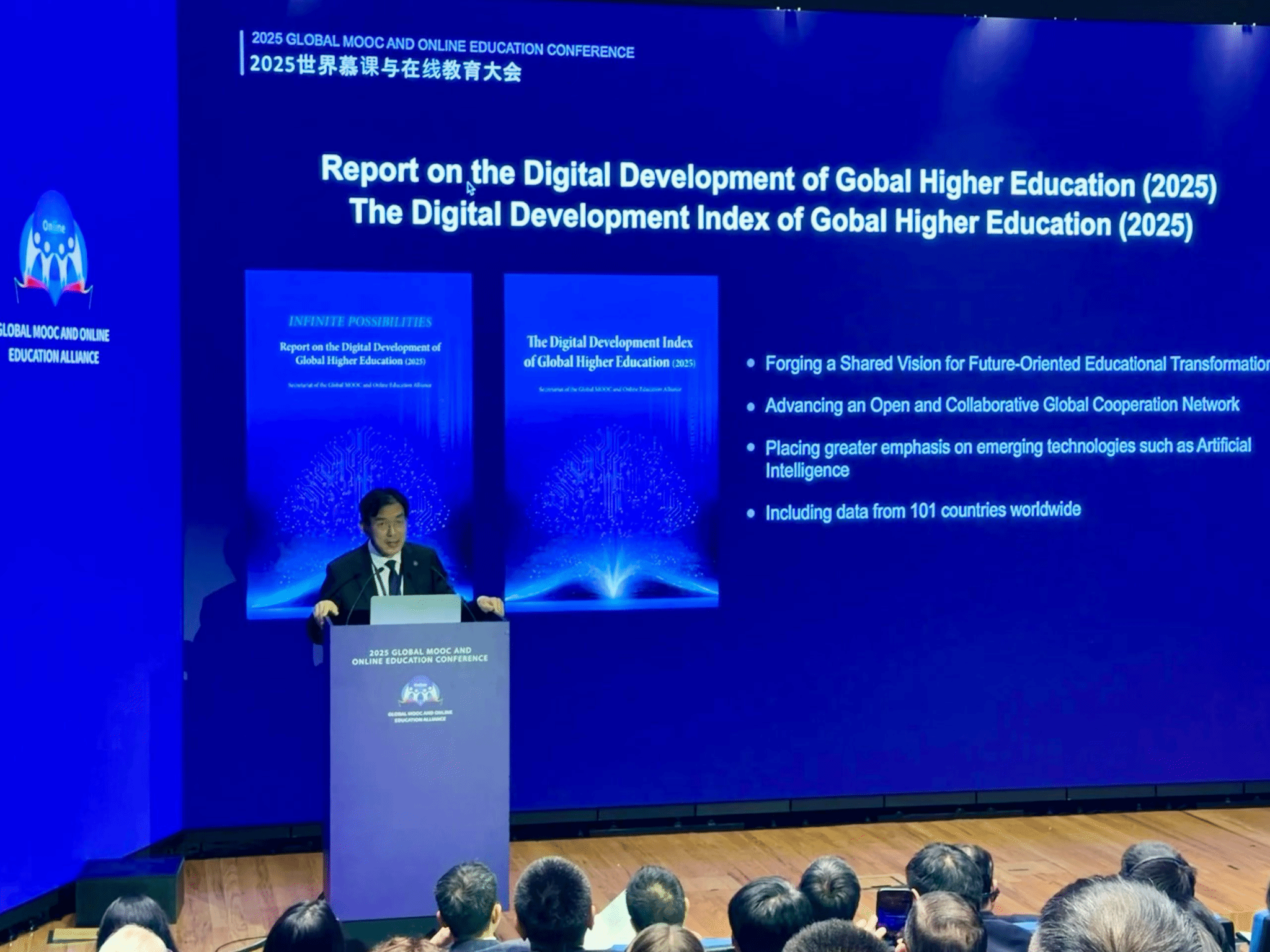
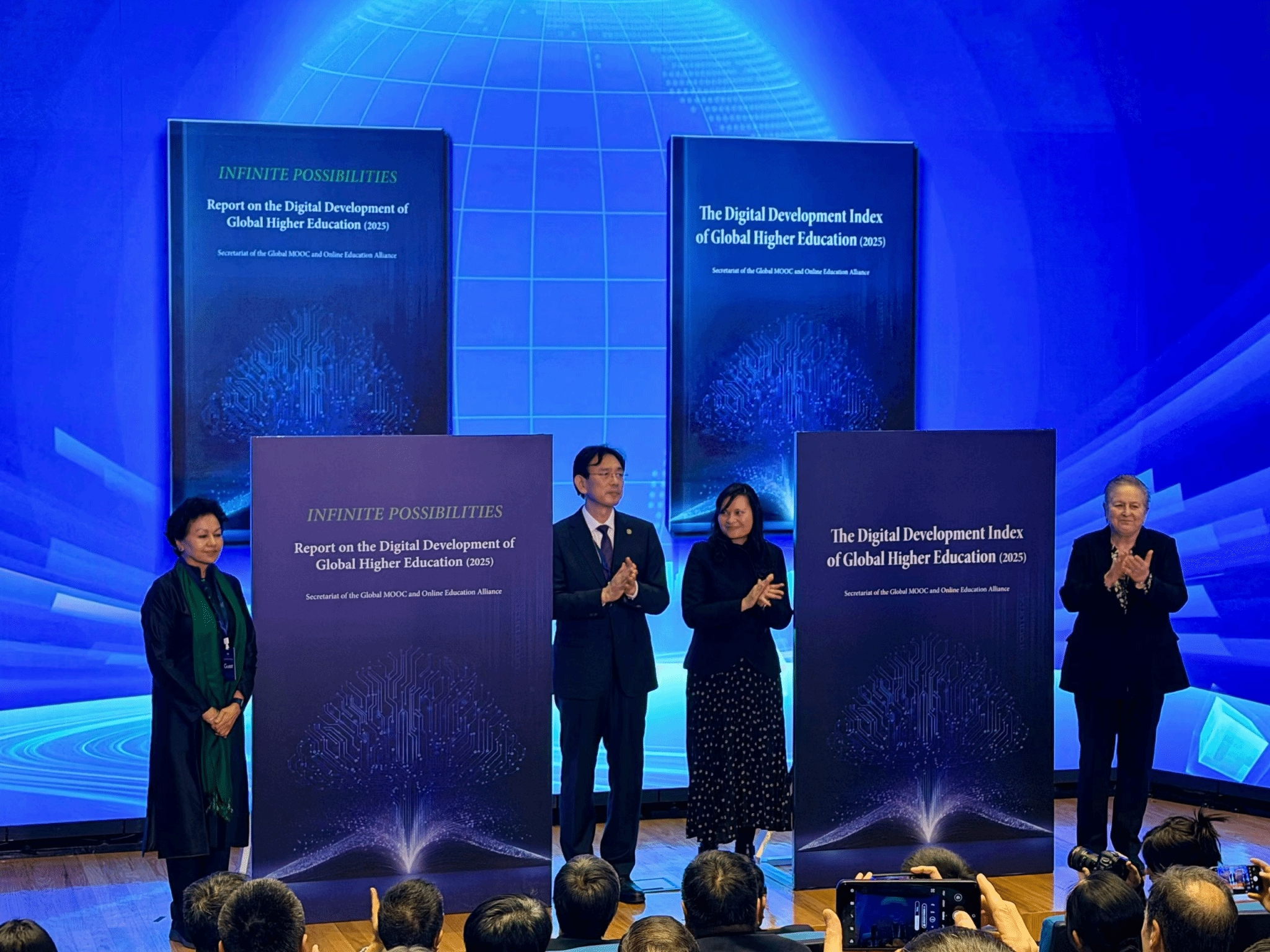
Two major reports were released during the conference: “Unlimited Possibilities: Global Higher Education Digital Development Report (2025)” and “Global Higher Education Digital Development Index (2025).”
The former proposed the “Intelligent Education Gateway Initiative,” aiming to fully activate the transformative potential of AI, build a more resilient and sustainable higher education ecosystem, and promote technology for social good by offering actionable strategies to address current challenges. The latter established an index system consisting of four primary indicators—digital learning, digital operation, digital management, and digital support—alongside 19 sub-indicators. It collected and analyzed data on higher education digitalization across 101 countries, presenting global trends through a comprehensive index system that provides scientific and precise reference for national digital higher education strategies. Professor BIE Dunrong’s team at our institute is among the primary contributors to both reports.
During the conference, Professor BIE Dunrong and Associate Professor GUO Yirong engaged in in-depth discussions with scholars and educational platform leaders from Tsinghua University, UNESCO IITE, UNAM, and other international universities. Their exchanges focused on AI-driven educational transformation, intelligent learning system development, and mechanisms for global knowledge collaboration. As a young scholar, postgraduate student LYU Zhen also participated in youth-focused sessions, engaging with global representatives on topics such as cross-cultural learning cooperation and the opportunities and risks of AI-empowered education.
The presentations and discussions throughout the conference highlighted the latest developments in global intelligent education, showcasing cutting-edge achievements in curriculum design, faculty development, innovative teaching models, and enhanced learning experiences. These insights provide important direction for building a more open, inclusive, equitable, and sustainable global education ecosystem. As a major annual event in the digital transformation of global higher education, the Global MOOC and Online Education Conference has become an influential platform promoting international educational cooperation, technological innovation, and high-quality development.
Our institute’s active participation in the conference not only strengthened its collaboration with the Global MOOC and Online Education Alliance but also deepened its academic exchanges with leading universities and research institutions worldwide. This engagement expands opportunities for our institute in the areas of international digital education, AI-driven educational innovation, and global governance research. Looking ahead, our institute will continue to track the transformative trends brought by artificial intelligence, promote the integration of academic research, talent cultivation, and international cooperation, and contribute more significantly to advancing the digital and innovative development of higher education in China.
Text and Photos: Lyu Zhen