On April 17, 2026, Associate Professor Yang Zi from the Institute of Education was invited to the Department of English and Communication at The Hong Kong Polytechnic University to lead a thematic workshop and engage in academic exchange on key issues related to artificial intelligence and language learning.
The workshop focused on rethinking the nature of learning in contexts where AI technologies are integrated into language education. It attracted participation from education researchers and second-language learners from multiple universities.
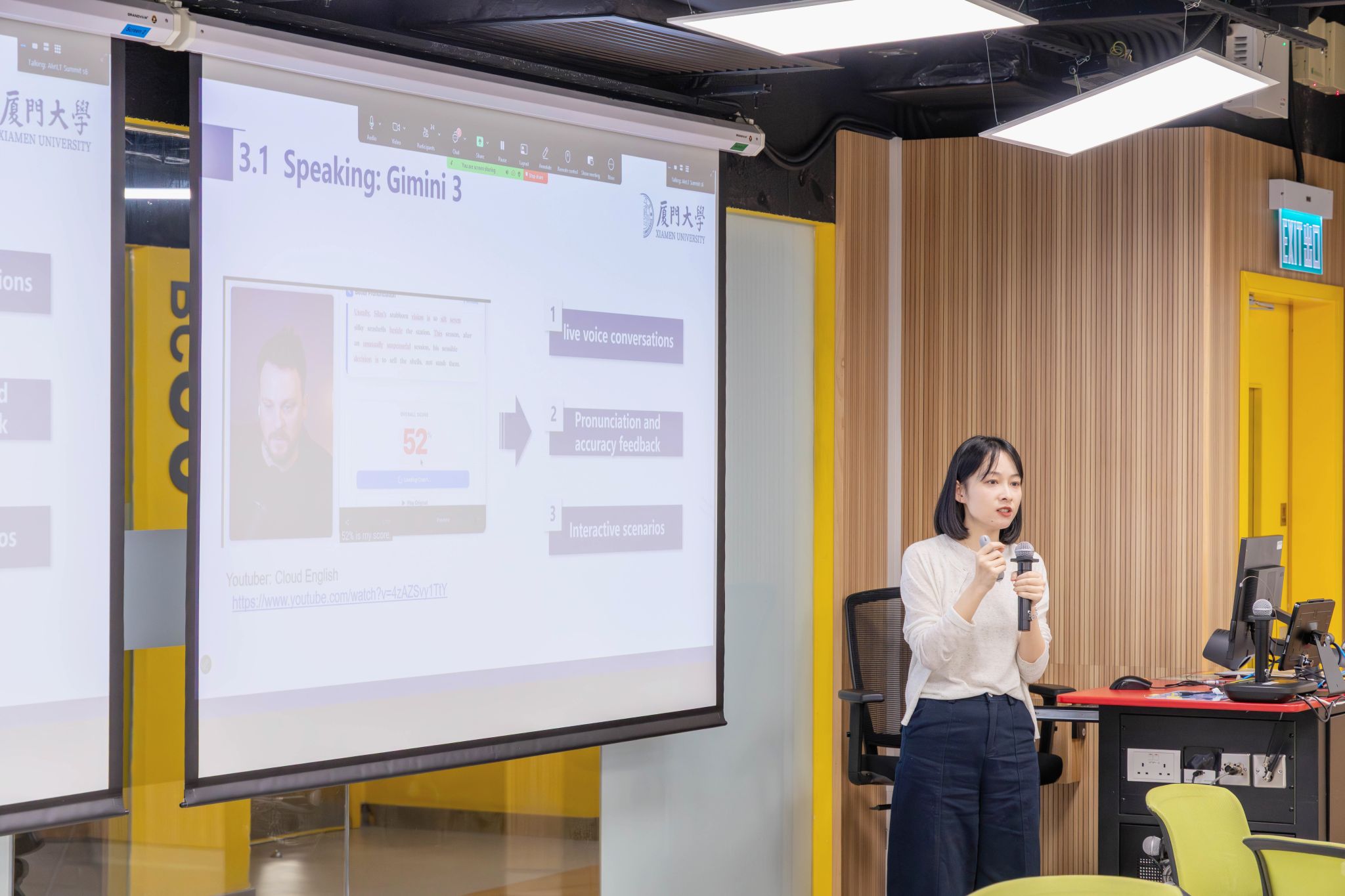
In the concluding academic lecture, Associate Professor Yang delivered a presentation entitled “What Are We Really Learning When We Learn with AI?”. Starting from the four fundamental language skills—listening, speaking, reading, and writing—her talk systematically examined the cognitive and competence structures that learners actually acquire when assisted by AI. The report highlighted AI’s significant potential in providing instant language output and personalized learning resources, while also pointing out the pedagogical tensions and challenges it introduces. Yang emphasized that the focus should not remain solely on the technical question of “how to use AI,” but rather on critically re-examining what “learning” truly means in a new environment where AI can generate language on demand. She called for the establishment of a critical perspective on AI-mediated learning, placing genuine language ability, learner autonomy, and critical thinking at the center of educational design, rather than encouraging passive reliance on AI tools.
During the session, participants engaged in lively discussions on practical strategies for integrating AI into classrooms, transformations in assessment methods, and the cognitive development of second-language learners. The interactive atmosphere extended beyond the workshop, with several scholars continuing conversations on related topics afterward. This workshop not only showcased the Institute’s cutting-edge reflections on digital education and AI-empowered learning, but also further promoted cross-institutional and interdisciplinary academic dialogue and collaboration.