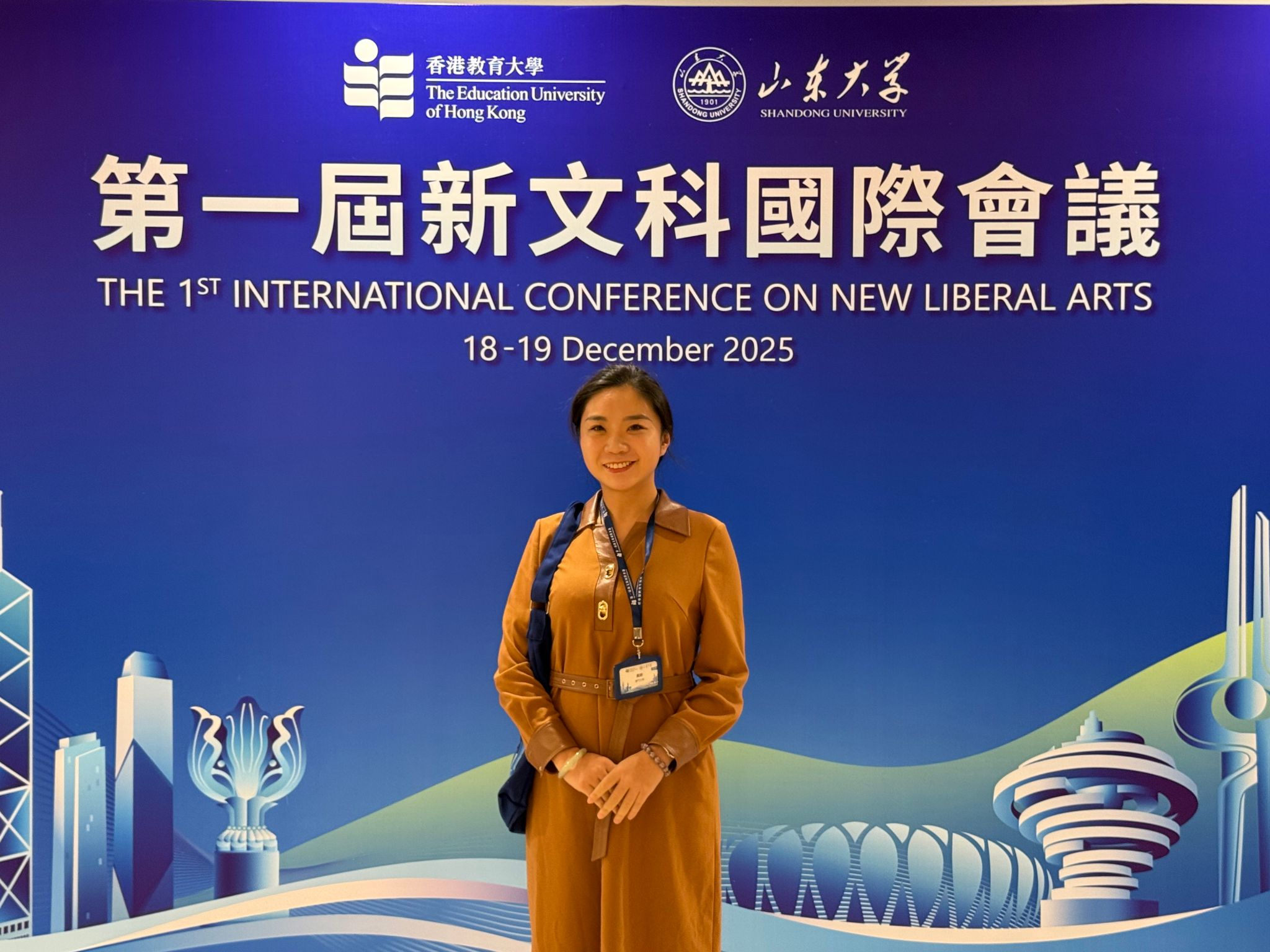
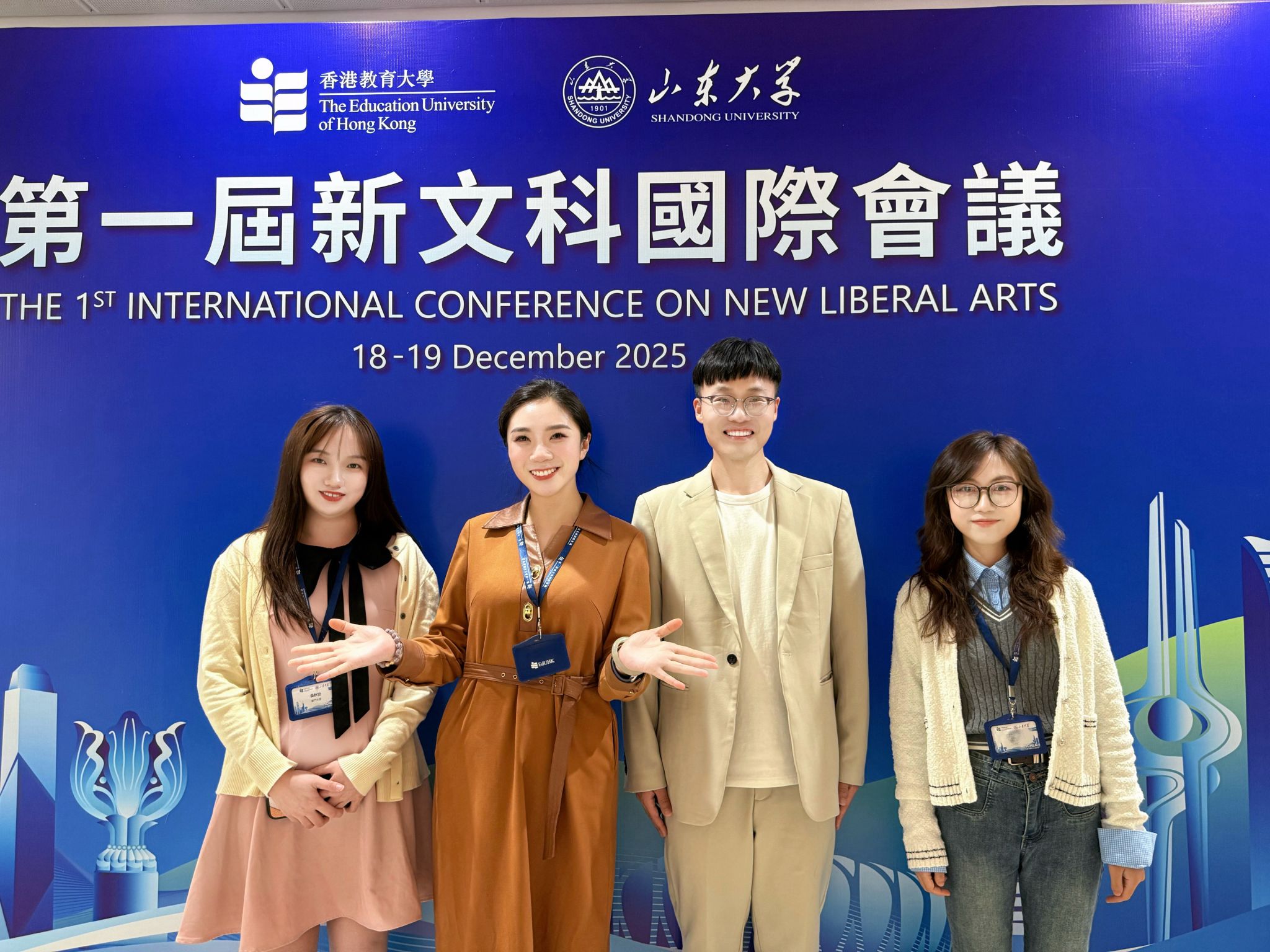
From December 18th to 19th, 2025, The 1st International Conference on New Liberal Arts, jointly organized by the Education University of Hong Kong and Shandong University, was successfully held at the Tai Po Campus of the Education University of Hong Kong. This conference mainly focused on four key topics: "Innovation in Public Policy", "Digital and Intelligent Regeneration of Cultural Heritage", "Utilizing Generative Artificial Intelligence to Enhance Teaching and Learning Efficiency", and "Cross-Digital Learning and Communication". It aimed to explore how digital technology profoundly reshapes academic research paradigms, teaching practice models, and social service paths, thereby integrating Eastern and Western academic thoughts, and promote paradigm transformation in the field of liberal arts education. This conference featured keynote speeches, roundtable forums, parallel sub-forums on four key topics, and poster displays, among other sections. Doctoral students Wu Qiuyi, Cheng Feiya, Liu Xuejun and Huang Yan from our college attended the conference and presented academic reports.
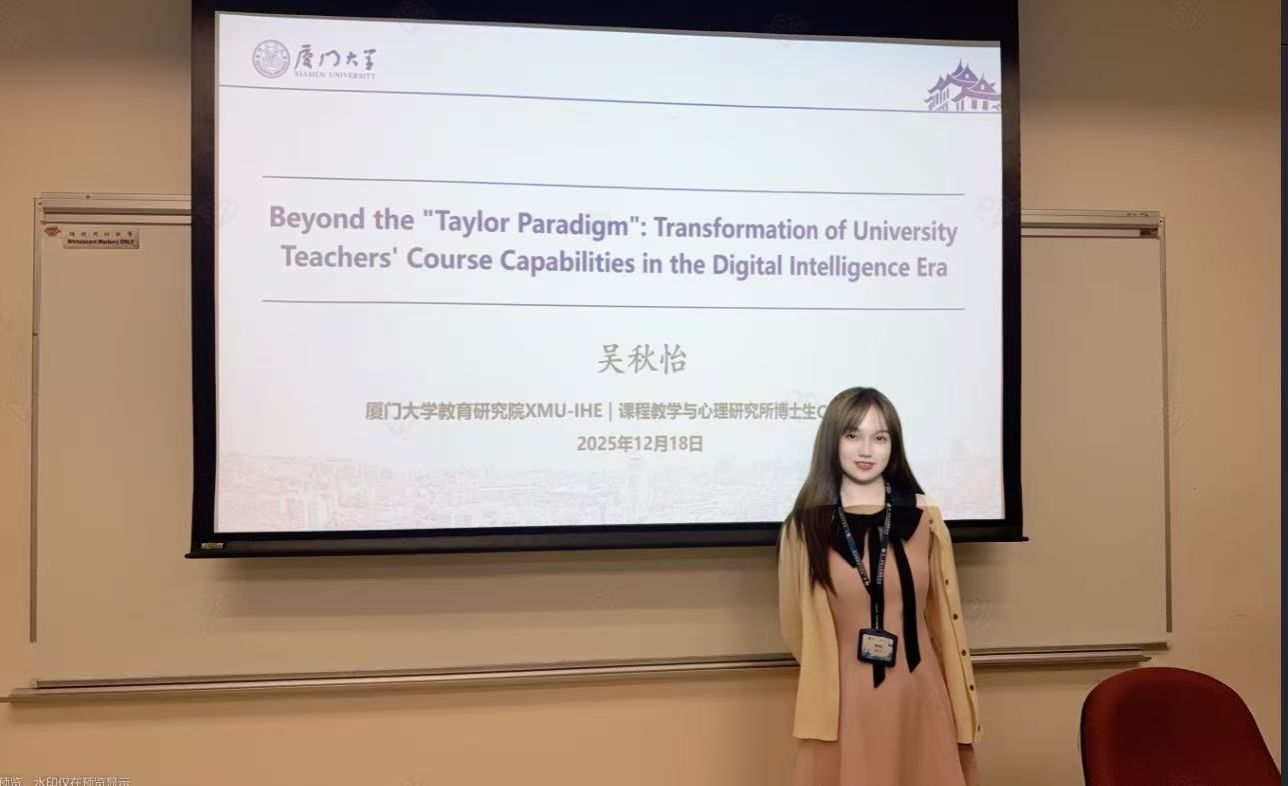
On the afternoon of December 18th, at the parallel sub-forum "Harnessing the Power of GenAI to Boost Teaching and Learning Effects", Doctoral student Wu Qiuyi delivered an oral presentation titled "Beyond the 'Taylor Paradigm' : The Transformation of University Teachers' Curriculum Capabilities in the Digital Intelligence Era", exploring the connotation and indicators of university teachers' curriculum capabilities, as well as why and how to transform them in the digital intelligence era and other related issues.
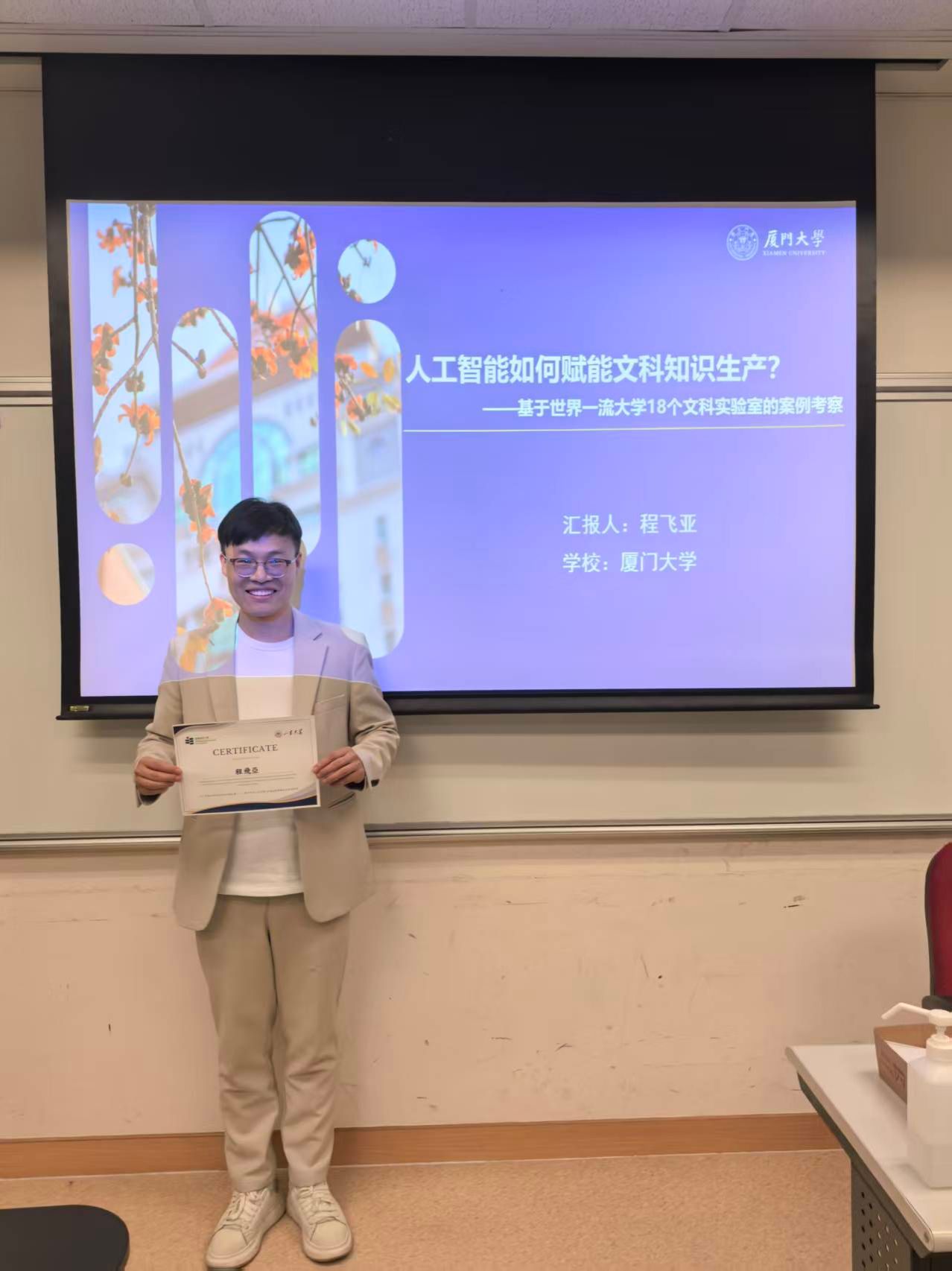
Doctoral student Cheng Feiya delivered a speech titled "How Can Artificial Intelligence Empower the Production of Liberal Arts Knowledge?" Based on the case study of 18 liberal arts Laboratories in World-class universities, it aims to construct a three-dimensional analysis framework of the artificial intelligence empowerment mechanism, knowledge production mechanism and organizational carrying mechanism, and take 18 "artificial intelligence + liberal arts" liberal arts laboratories in world-class universities as research cases to reveal the core essence of artificial intelligence empowering liberal arts knowledge production.
Doctoral student Liu Xuejun presented a paper titled "The Reform Approach of Undergraduate Education Major Talent Cultivation under the Background of New Liberal Arts Construction". Based on the background of the construction of new liberal arts and focusing on social needs, this research takes online job information as the entry point to analyze the social demand for undergraduate talents in education, clarifying the current practical needs and quality requirements of society for the cultivation of undergraduate talents in education. Propose a reform approach for the cultivation of talents in undergraduate education programs, providing new perspectives and paths for talent cultivation and discipline reshaping.
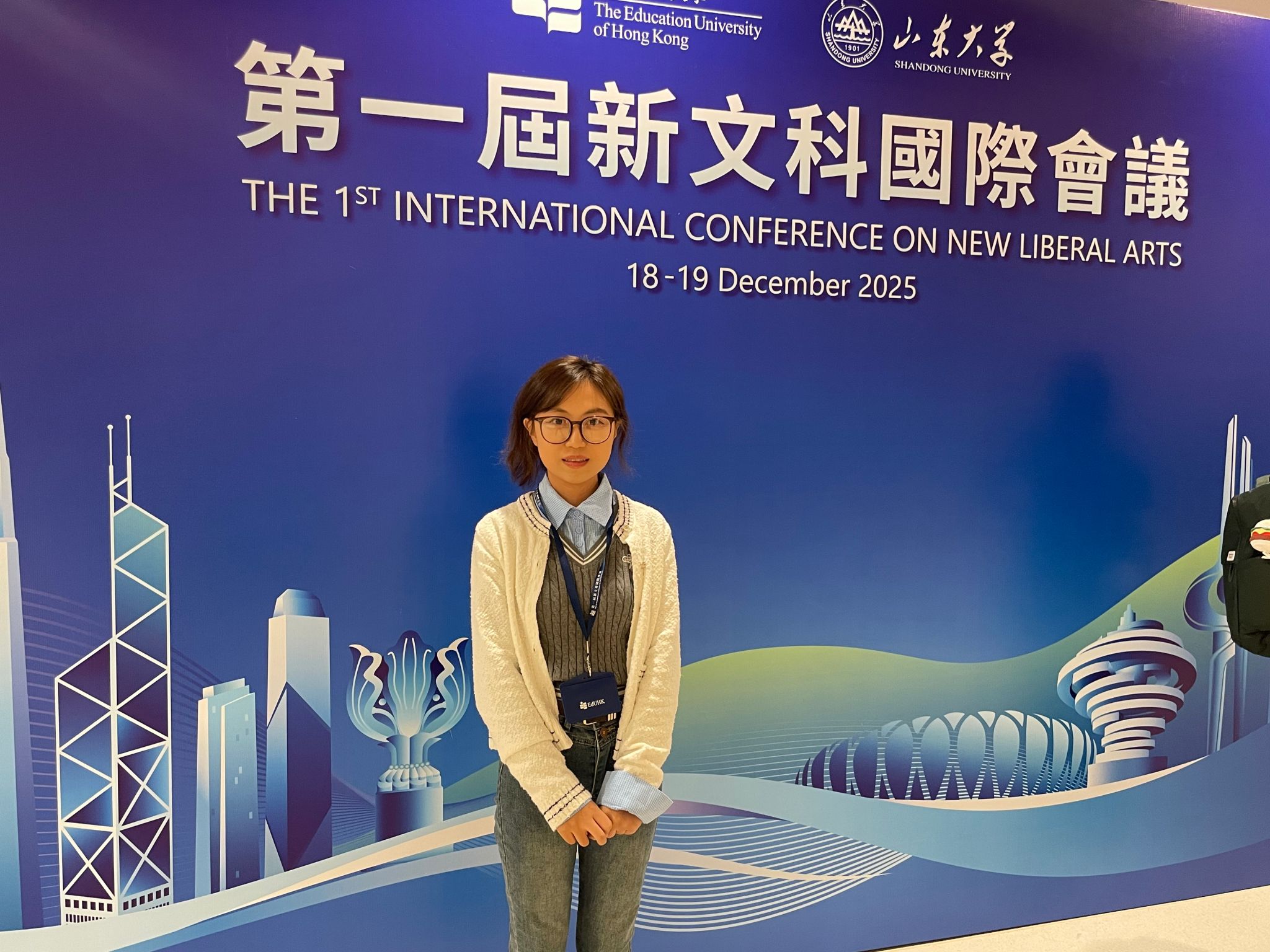
Doctoral student Huang Yan presented her paper titled "Perceived Emotional Experience of Chinese Engineering Students in Artificial Intelligence-Mediated Education: An Expectation - A Value Theory Perspective". This study explores the emotional experiences of Chinese engineering students in the context of artificial intelligence technology and the reasons behind them through the expectation-Value Theory (EVT), revealing eight positive and six negative emotions experienced in AI-mediated education. These emotions are related to their "self-efficacy", "experience of mastery and achievement", "perceived value of education", "technical challenges", "fear of being replaced", and "perceived inefficiency and bias of AI tools". In-depth discussions were held on the emotional experiences triggered by each type of AI to enhance their understanding of AI-induced sensibility within this field.