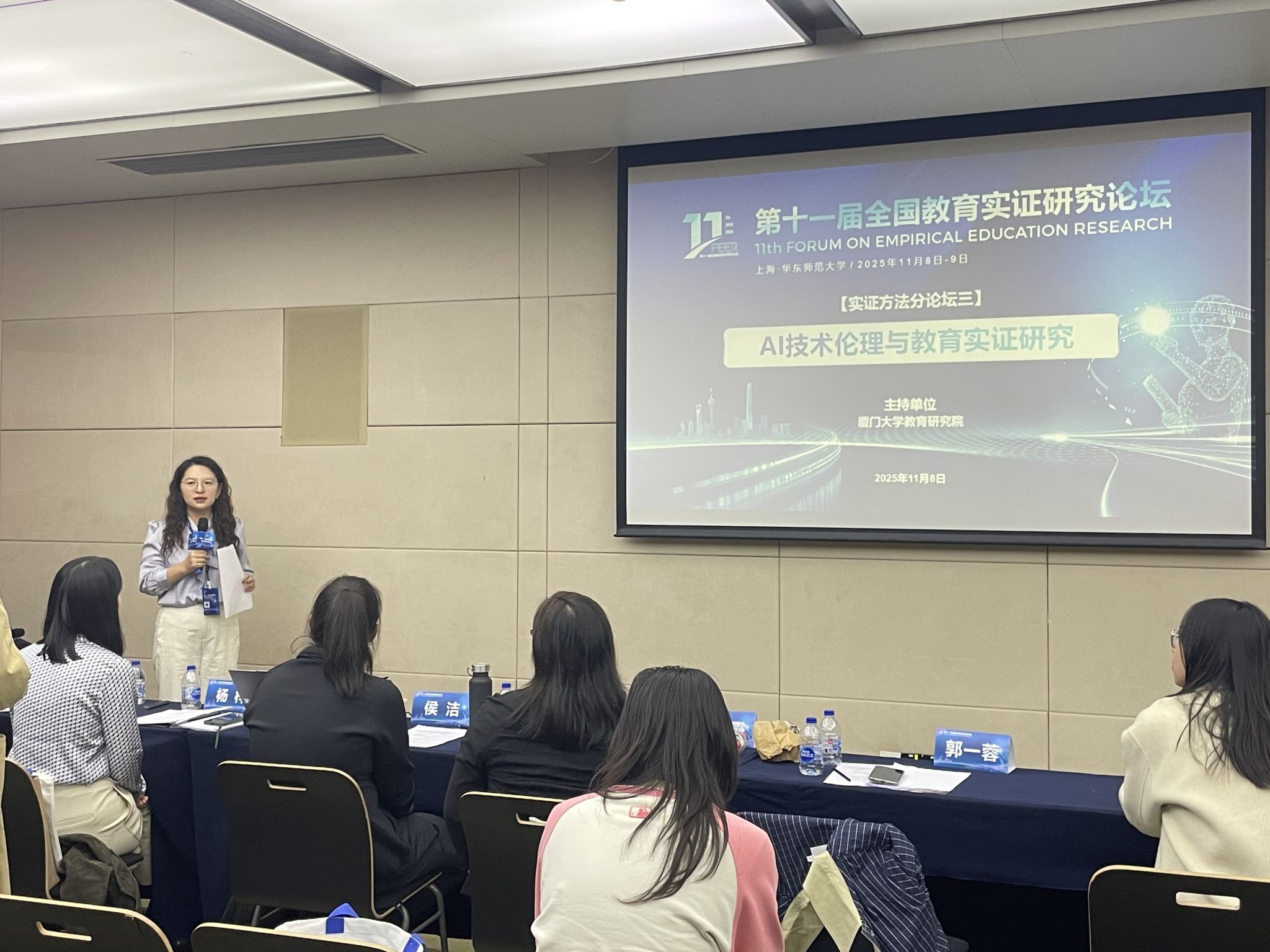
On the afternoon of 8 November 2025, the sub-forum “AI Ethics and Empirical Research in Education” was successfully held at the Shanghai Banma Suzhou Creek International Convention Center as part of the 11th National Forum on Empirical Research in Education. Organized by Xiamen University’s Institute of Education, the session brought together faculty and students from Fudan University, Zhengzhou University, Qingdao University, South China Normal University, East China Normal University, Shenzhen University, Xiamen University and other institutions for an in-depth exchange on the theoretical frontiers and practical challenges at the intersection of artificial intelligence and educational ethics.
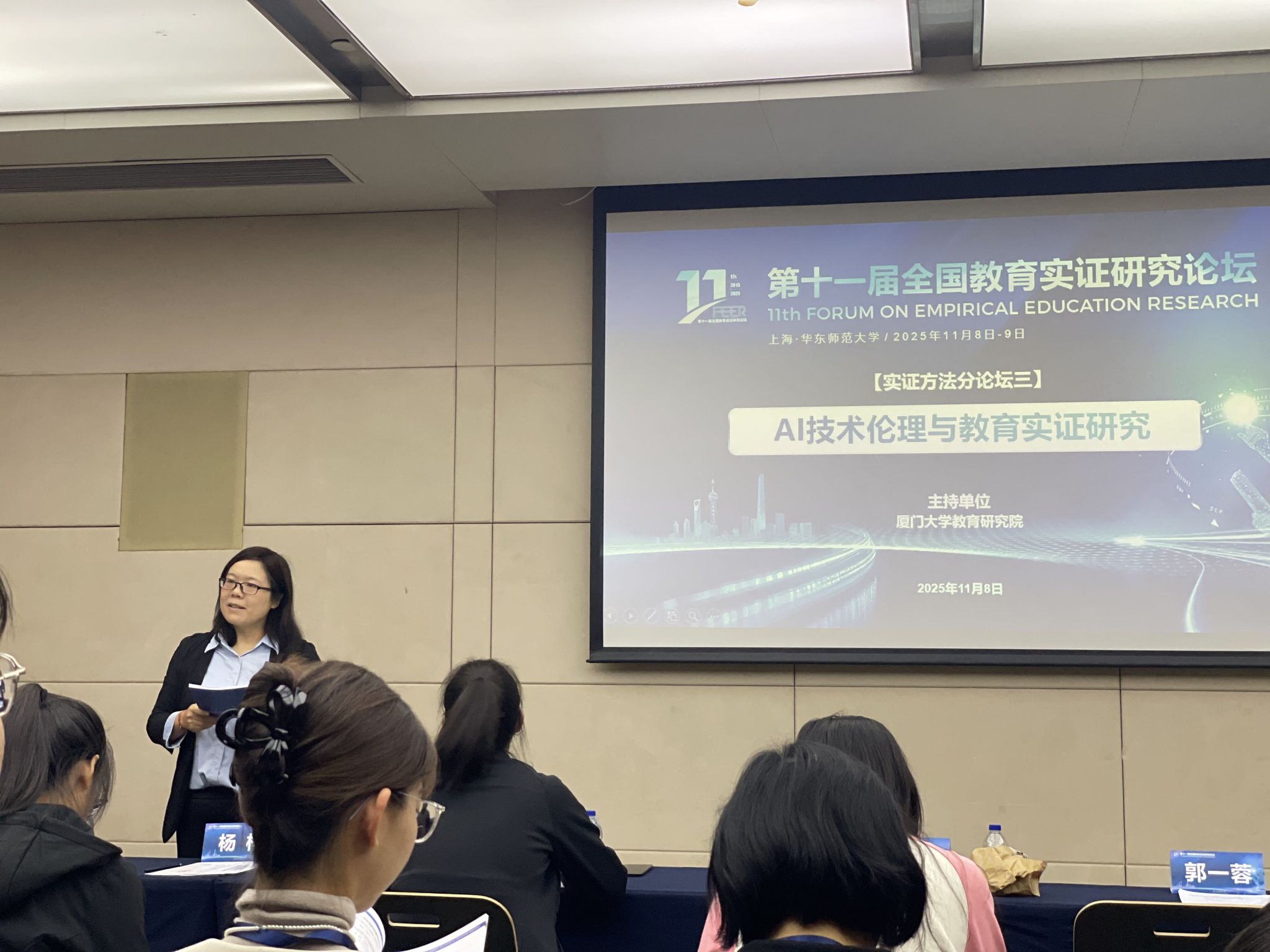
The first half of the sub-forum was chaired by Professor Qin Hongxia, Vice Dean of Xiamen University’s Institute of Education. She extended a warm welcome to all faculty and student participants, expressed heartfelt thanks for their active attendance, and looked forward to an in-depth dialogue on educational reform and practice that would allow everyone to share valuable insights.
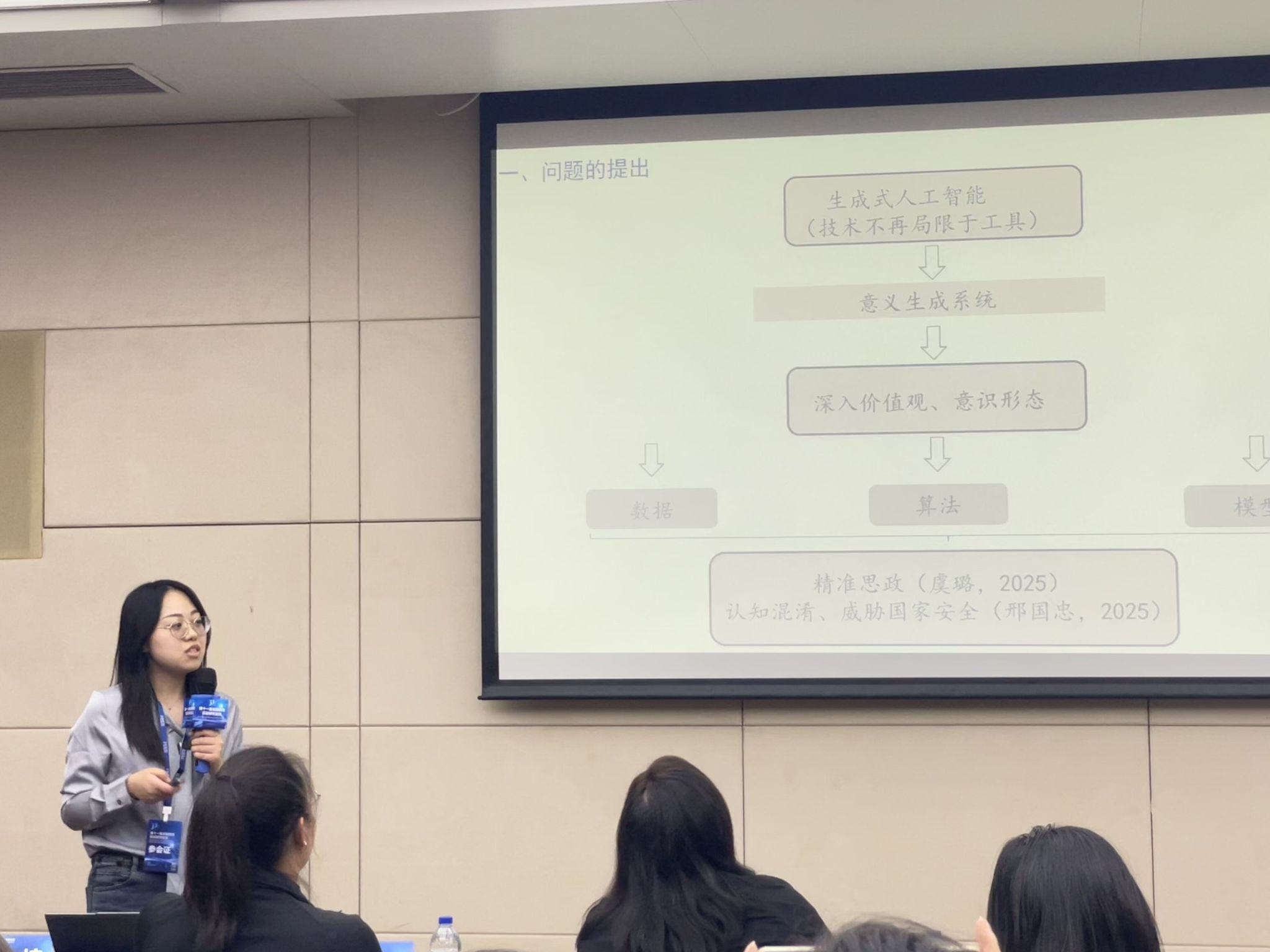
Dr. Yang Yuqian from the School of Marxism at Fudan University, in her presentation titled “Facilitating or Inhibiting: The Impact of Generative Artificial Intelligence on University Students’ Identification with Mainstream Values,” argued that generative AI can both potentially reinforce and fragment students’ alignment with mainstream values. She urged educators to strengthen value guidance as AI becomes ubiquitous, helping undergraduates cultivate healthy, rational mainstream value systems within an intelligence-saturated environment.
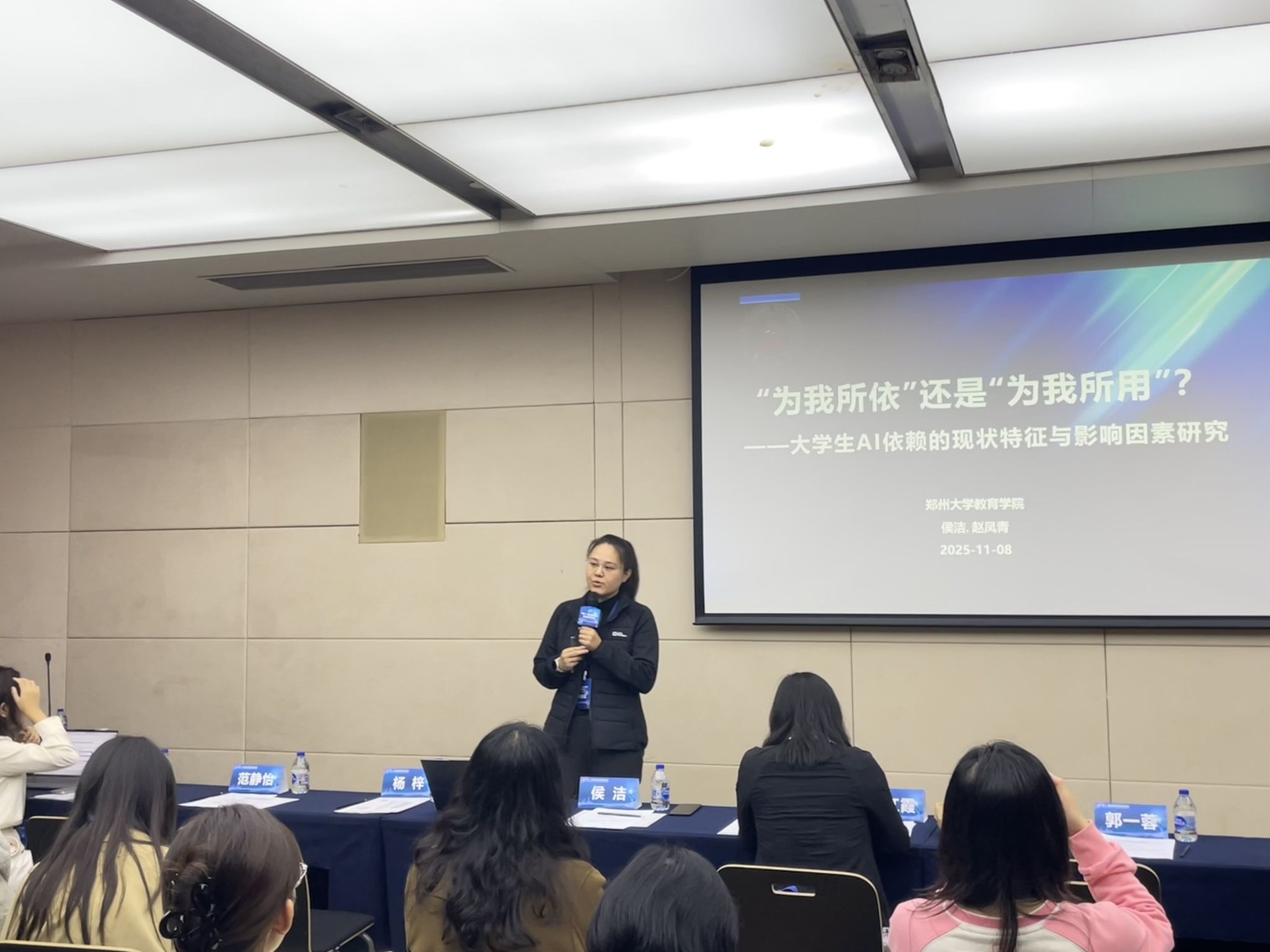
Next, Associate Professor Hou Jie from the School of Education at Zhengzhou University delivered a report entitled “ ‘Lean on It’ or ‘Use It’? A Study on the Current Status and Influencing Factors of University Students’ AI Dependency.” Drawing on systematic survey data, she dissected the psychological structure and behavioral patterns of students’ AI reliance, unpacked the underlying cognitive mechanisms and socio-environmental drivers, and proposed educational strategies for cultivating a rational approach to AI use—offering both theoretical grounding and practical guidance for helping undergraduates engage with artificial intelligence in a balanced, purposeful way.
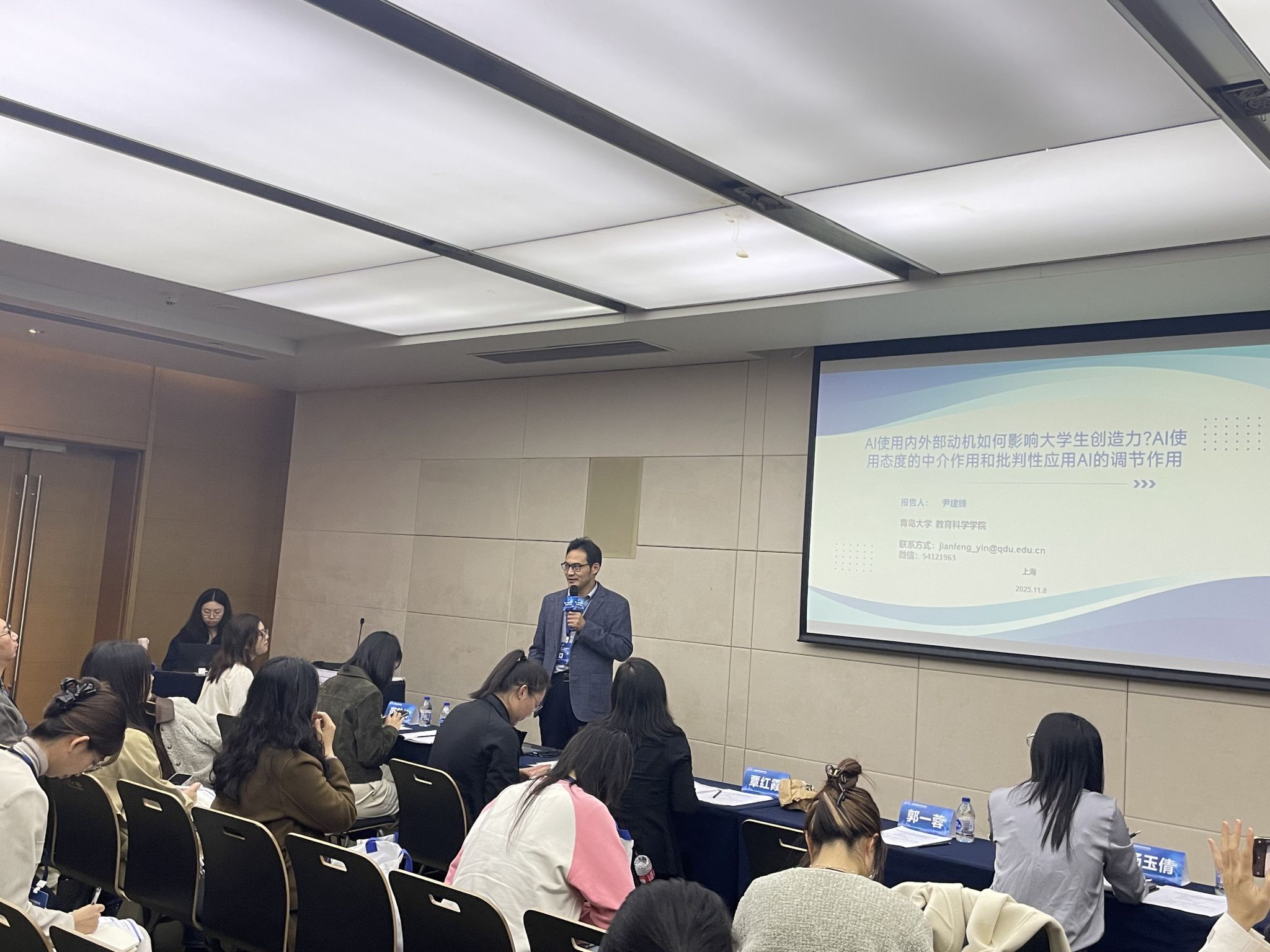
Associate Professor Yin Jianfeng from Qingdao University’s College of Education, Science and Technology presented “How AI-Use Motivation Shapes University Students’ Human–Machine Collaborative Creativity.” By modeling the relationship between students’ motivation to use AI and their creative performance in human–machine teams, he showed that attitudes toward AI fully mediate the effect, while critical AI literacy acts as a key moderator. The findings offer fresh theoretical insight and practical guidance on how AI can be harnessed to cultivate creatively talented graduates.
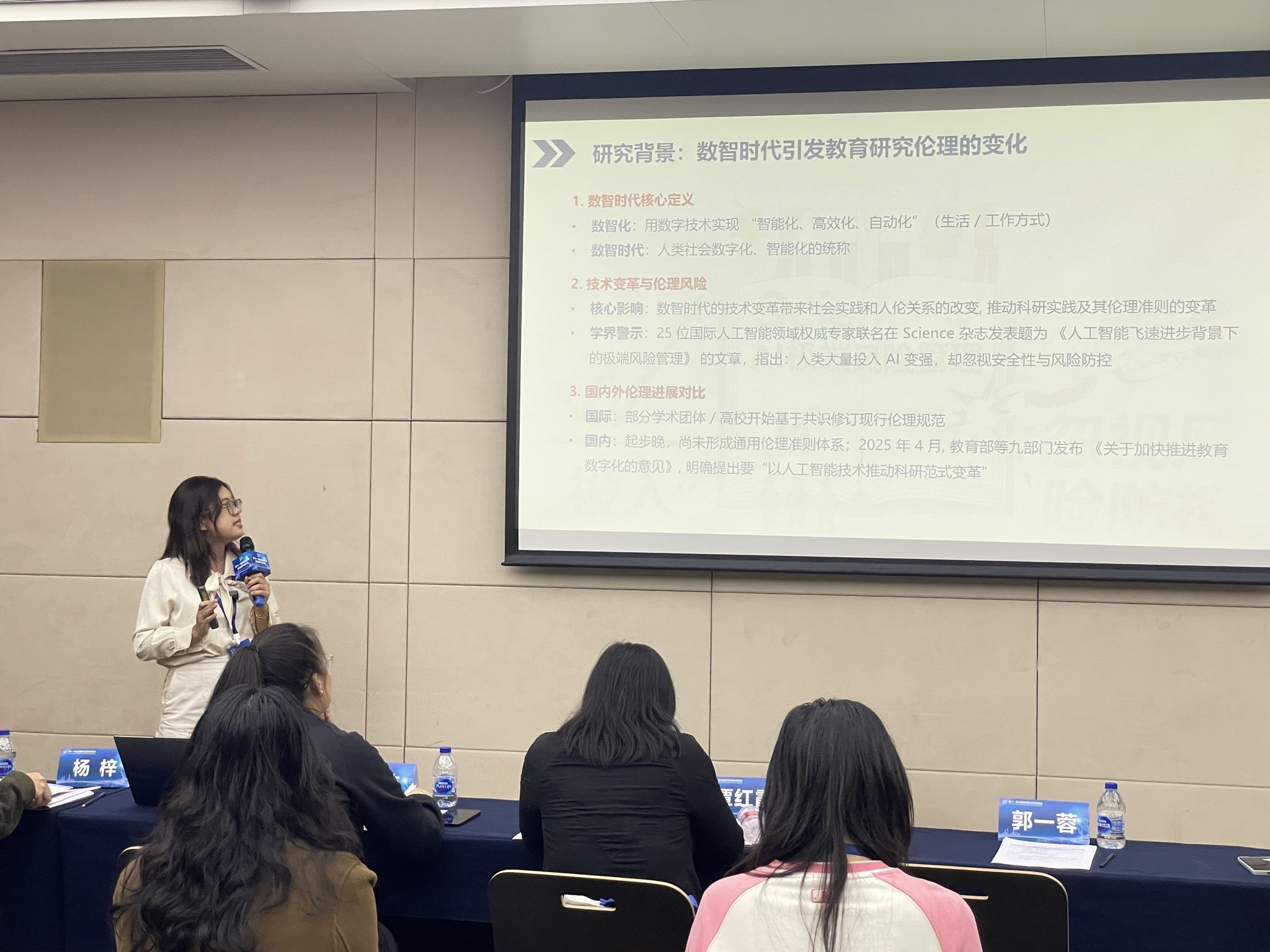
You Hongmiao, a master’s student at East China Normal University, delivered a report titled “Responding to Ethical Challenges and Crafting Norms for Educational Research in the Data-Intelligence Era.” Taking an institutional perspective on research ethics, she dissected the data-security and privacy-protection risks that arise when AI is woven into educational inquiry, underscoring the urgent need to build a comprehensive ethical-regulatory system. Her analysis furnishes critical reflections for steering the normative development and ethical governance of education research in the age of data and intelligence.
The second half of the sub-forum was chaired by Associate Professor Guo Yirong, Deputy Director of the Institute for Educational Development and Governance at Xiamen University’s Institute of Education. Anchored in cutting-edge educational practice, she guided participants through a spirited and thought-provoking dialogue on innovative explorations and hot-button issues, vividly showcasing the dynamism and intellectual tension that characterize empirical research in education.
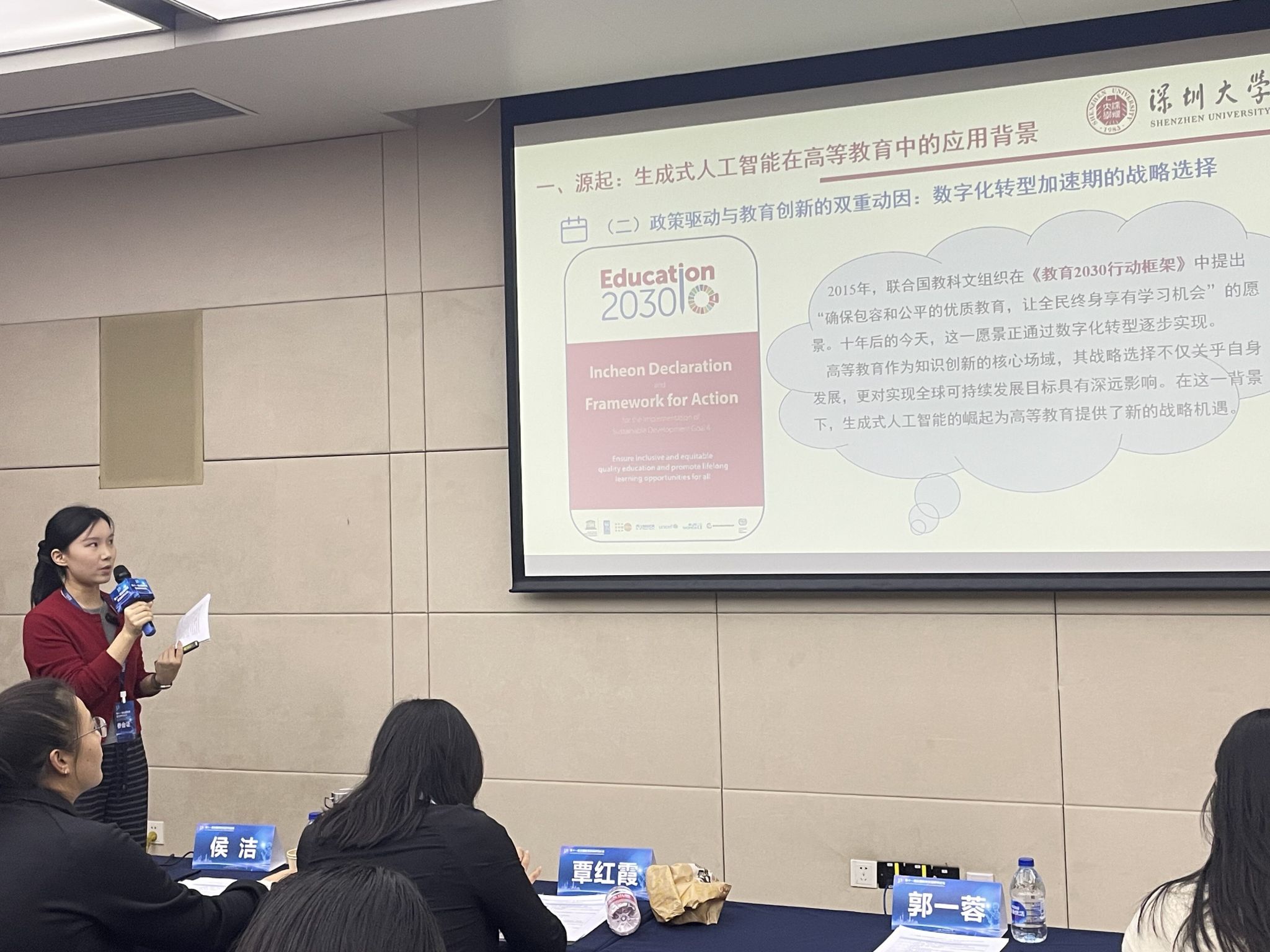
Fan Jingyi, a master’s student in the Faculty of Education at Shenzhen University, presented “Beyond Incremental Adaptation: Application Pathways and Real-World Challenges of Generative AI in Higher Education.” She argued that universities still suffer from outdated pedagogical mind-sets and insufficient institutional support, and called for a systems-innovation approach to drive deep, transformative integration of AI and higher education—offering actionable pathways for high-quality development of universities in the intelligence era.
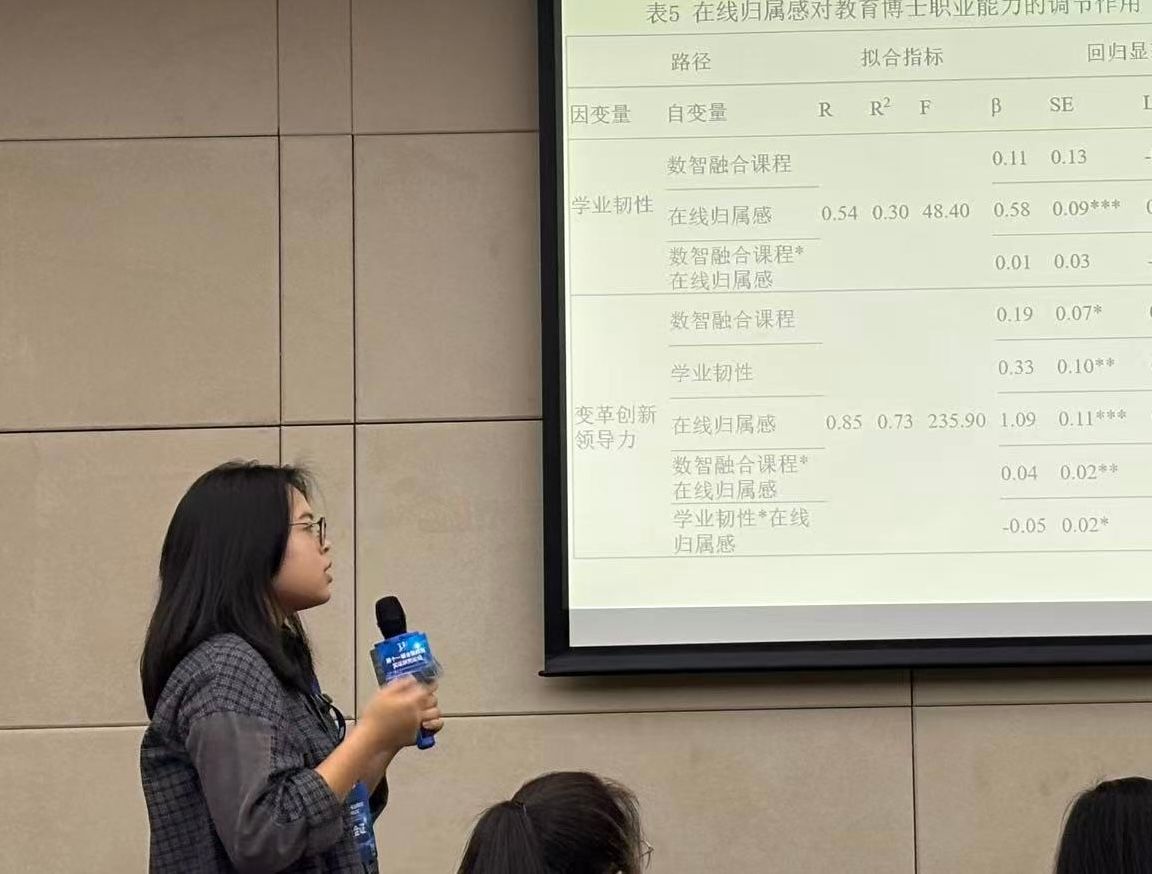
Chen Wenxin, a doctoral student at Xiamen University’s Institute of Education, delivered a report titled “The Formation Logic and Enhancement Strategies of Professional Competencies for Ed.D. Students in the Data-Intelligence Era.” Through an in-depth analysis of Ed.D. training data, she systematically outlined the distinctive features of doctoral education in this era, scientifically mapped the taxonomy of professional competencies required of education doctorates, and revealed how individual agency and collective synergy jointly shape competency development. Her findings offer both theoretical grounding and practical guidance for innovating Ed.D. programs in the age of data and intelligence.
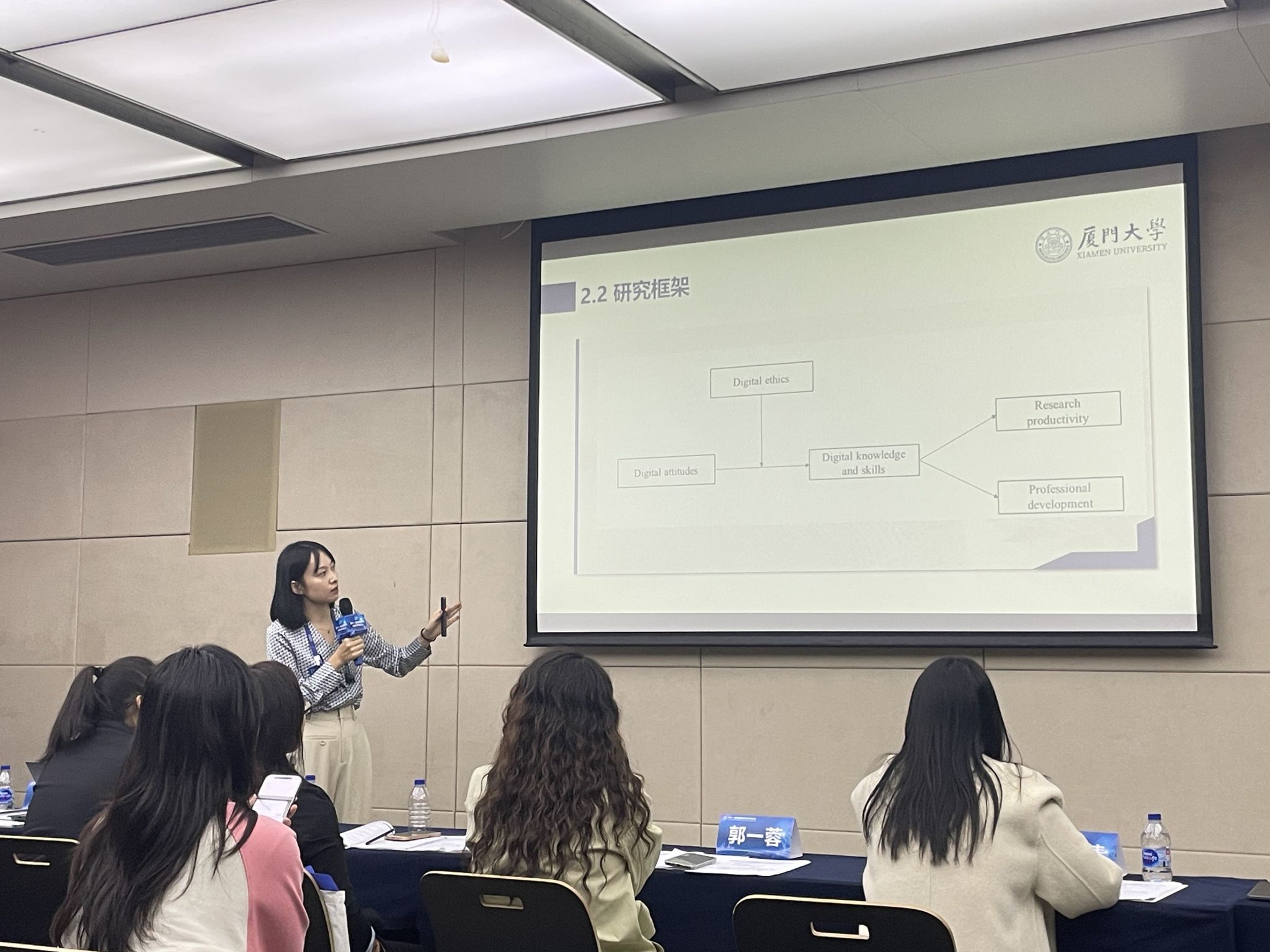
Dr. Yang Zi, Assistant Professor at Xiamen University’s Institute of Education, closed the session with “How Digital Attitudes and Ethics Shape University Faculty’s Research Productivity and Professional Growth.” Constructing a moderated-mediation model that links “attitudes & ethics → knowledge & skills → research performance & professional development,” her empirical analysis demonstrated that faculty members’ awareness of digital ethics significantly influences both scholarly output and career advancement. The finding furnishes a fresh theoretical lens on the mechanisms underlying teacher professionalism in the digital era and provided the forum with a finale that was at once academically rigorous and practically illuminating.
Centering on the intersection of artificial intelligence and educational ethics, the sub-forum offered a systematic showcase of cutting-edge work by scholars from Fudan, Xiamen and other universities on AI applications, ethical frameworks, learning analytics and teacher professional growth. Through spirited dialogue and intellectual cross-fire, participants gave vivid expression to a shared concern—and an emerging scholarly consensus—for sustaining a dynamic balance between “technological empowerment and humanistic guidance.” The gathering not only deepened pluralistic understanding of the challenges facing education in an intelligent age, but also delivered academically grounded, practice-ready insights for constructing ethical norms in educational research and for steering the next wave of innovation in the digital transformation of education.